GLOBALISATION AND THE GOVERNMENT EMPLOYEES
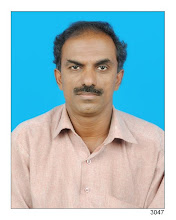
- M.K. Pandhe
The policies of the World Bank on the structural adjustment programme, popularly known as globalization, has hit hard the working class all over the world. It seeks to abolish the role of the Government in establishing the so called welfare state. The concept of market economy, which allows market to decide everything has resulted in a cut throat competition among the employers to cut down the cost, which mainly resulted in cutting down the cost of labour. Drastic reduction in manpower, restraint in enhancing wages and terms of service conditions of the employees and enhancing the workload on the workers became chief weapons in the armory of the Governments and the employers in dealing with the employees.
The ban on recruitment in Govt. services and refusal to fill up a large number vacancies was resorted to a large scale to cut down the manpower requirement in the central and state services. Increasing resort to outsourcing of jobs and engaging contractual and casual employees at low wage levels was considered a part of national policy as cost cutting measure. The sprawling growth of extra-departmental employees in postal services was a part of this retrograde policy framework.
In railway establishments a large number of jobs were handed over to contractors like catering services, maintenance of railway stations etc. while the new development programme visualizes public-private-partnership model which gives bonanzas to private sector operators at the cost of public funds. The privatization of train services in under consideration of the Government like the model operating in European countries which will further bring down the requirement of regular employment in the central services. The freight corridor has already offered several concessions to the private sector operators.
The Defence units the ordnance factories are being earmarked for corporatisation which is a step towards ultimate privatization. The orders given to the ordnance factories are being cut down and handed over to the private parties. The employment in ordnance factories is gradually getting reduced due to this policy of the Govt.
About 70 per cent of our defence equipment is being imported by the Govt. of India many of which can be produced indigenously. The DRDO’s are not given suitable opportunities to develop indigenous research with a view to make India self-reliant in the matter of defence production.
The Report of the Kelkar Committee which has strongly advocatedfirm steps to privatize defence production units in India and drastically reducing the role of public sector undertakings in defence production.
THREAT TO SOCIAL SECURITY
Curtailment of social security measures for the workers has been a global phenomenon. It has particularly affected the developing countries in a severe manner. As noted by a paper prepared by the World Bank, “The international financial crisis has severely affected the value of pension fund assets worldwide. The unfolding global recession will also impose pressures on public pension schemes financed on a pay-as-yo-go basis, while limiting the capacity of governments to mitigate both of these effects.” The paper further noted that, “….decline in asset prices can still materially reduce retirement benefits.”
In Europe where pension funds are already privatized, the condition was extremely precarious. According to a study on the impact of the economic crisis on the private pension fund has pointed out the following losses in private pension funds:
Poland-5.95 billion Euros, Hungary-2.112 billion Euros, Czech Republic – 210 million Euros, Slovakia – 195 million Euros, Croasia – 146 million Euros, The Baltic States – 100 million Euros, Bulgaria – 95 million Euros, Slovema – 80 million Euros(One billion Euros – Rs.6500 crore).
The Government of India’s attempt to convert the present defined benefit pension scheme with defined contribution pension scheme is a direct attack on the retirement benefit of the one crore Govt. employees all over India. The Pension Regulatory Authority Bill which was kept in cold storage in the first UPA Government regime due to the pressure of the left parties and Government employees trade union movement is being brought again for consideration by the Government. Many sections of the Bill have been already implemented by the Govt. through executive order by the Government of India. Several State Governments have endorsed this approach of the Central Government.
There is urgent need to strengthen the united movement of the Central Government employees so that these attacks are stalled by resistance by the employees movement.
Several lakh pensioners of the Central and the State Government employees are getting organized because they are facing several problems. The Government has not recognized pensioners association as trade unions, though they have relations with the Government as retired employees.
There is urgent need to strengthen the nationwide untied movement of the pensioners so that the legitimate interests of the pensioners are protected. With steep rise in prices of essential commodities, several pensioners are finding it difficult to maintain their livelihood and attempts should be made to grant relief to them. The discriminations done to the employees who have joined service after 2004 and have to pay contribution towards pension benefit also needs to be properly addressed.
DOWNSIZING OF MANPOWER
As noted earlier, Downsizing of man-power was one of the key policy measure adopted by the Govt. of India. During the NDA regime led by Atal Bihari Vajpai 2 per cent reduction of manpower every year was called upon keeping the target of 10 percent reduction in a period of 5 years. The UPA Government continued the same policy and further reduction of manpower was achieved. The total employment strength of Central Government employees stood at 38.92 lakhs in 1995 which came down to 30.9 lakhs in 2005 and further declined to 28.5 lakhs in January 2008.
According to Sixth Pay Commission the total employment in railways was 13.11 lakhs, Defence 3.66 lakhs, Postal Deptt. 2.40 lakhs and Home Deptt. 6.77 lakhs was reported which indicate the drastic reduction of manpower in Central Services. In State Services since globalization was introduced, the manpower declined from 70 lakhs to 60 lakhs i.e. reduction of over 12 per cent and the process of further reduction in continuing.
Two major and Core Conventions of the International Labour Organization namely, Freedom of Association and Protection of the Right to organize (1948) No.87 and Right to organize and Collective Bargaining Convention (1949) No.98 have not yet been ratified by the Government of India on the plea that these rights cannot be granted to Govt. employees and policemen. Though they have not been ratified the ILO looks into complaints filed by national trade unions and enquire about the violation of these Conventions.
Despite over six decades of India’s independence the Central and the State Government employees in India have not got this right so far. However, the countrywide movement of the Central and the State Government employees through their bitter struggles have been able not form Associations and even organize strike actions in support of the common demands of the working class. The participation of the Confederation of Central Government Employees Unions, All India Railway men’s Federation, All India defence Employees federation and All India State Government Employees Federation in the activities of the National Campaign Committee of Trade Unions and later in the Sponsoring Committee of Trade Unions have asserted their right to organize. They even have joined the strike struggles despite ban on them even by the Supreme Court. The dividing wall between the Central and State Govt. employees movement and the General trade union movement has been torn asunder through long drawn movements.
However, several restrictions on T.U. activities are still in operation. The undemocratic recognition rules and curtailing several aspects of freedom of Association, while Presidential power to dismiss an employees without assigning any reason still continues to exist in our constitution. The right of collective bargaining is denied to them and the Civil Service Conduct Rules framed by British imperialism continue to be operative in its basic form. The system of confidential reports is still hovering over the Government employees which gives arbitrary powers to bureaucrats to be vindictive against an employee.
The Central and the State Government employees movement must raise their powerful voice against the draconian rules prevailing in India. While fighting for their immediate pressing demands the struggle for unhindered T.U Rights must be strengthened at a national level. A joint movement by all the unions in central services on this issues with the support of the mainstream T.U. movement can effectively highlight their just struggle compelling the Govt. of India to change its basic approach so that full T.U. rights are enjoyed by all the Govt. employees in India.
THE RETROGRADE SIXTH PAY COMMISSION
The Report of the Sixth Pay Commission clearly reflects the policies of globalization. At the outset it refers to “increasing globalization of trade and industry with greater emphasis on increasing investment and transfer of technology.” “An imperative and urgent needs exists to harmonize the functioning of the Central Government organizations with the demands of the emerging global scenario.”
The terms of reference of the Sixth Pay Commission reflects the need for adopting to the new changed global scenario. The Report clearly pointed out, “The Government machinery has to learn to adopt to these changes and to leverage knowledge and technology for better performance under stricter fiscal discipline and better delivery mechanisms. The Terms of Reference of the Commission suitably reflect this changed imperative”. (Page6)
The Pay Commission then talks about excessive job security available to the Govt. employees and “cumbersome rules act as hindrance to easy exit of Government employees” (Page 8).
In Keeping in tune with the policies of globalization the Sixth Pay Commission recommended “introduction of contractual appointments for selected posts, particularly those requiring high professional skills. Under this, suitable persons from outside can be inducted in Government” (Page 9). Thus advocates of private sector and supporters of policies of globalization could be inducted in Government service to accelerate the so called reform process. To clarify the policy further the Commission observed”. After the expiry of the tenure, the concerned employee may renegotiate the contract or leave. This will allow salaries that are broadly comparable to the private sector with similar terms of engagement to be paid in the Government.”
The Commission thus wants the Government to copy the policies pursued by the private sector undertakings. The private sector pays higher salaries to the executives and lower pay to the subordinate staff. It wants the same policies to be pursued by the Pay Commission. It therefore substantiate this view with the following statement.
“This will enable the Government to pay a higher and need-driven remuneration depending on the particular expertise of the concerned employee which will also stall the efflux of such employees to the private sector at a time when Government needs their experience”.
The logic of market economy that the salaries of the employees would be decided by demand the supply concept. The lower level employees are plenty in supply and hence should be paid less while the executives are in short supply and hence should be paid more. The Pay Commission has therefore recommended much higher salaries for the top heavy bureaucrats while low rise to the employees of junior categories. This policy is also reflected in abolition of group D category and allotting these jobs to contract workers or outsourced them to private parties.
PRIVATISATION IN DEFENCE
Several multinational companies in collaboration with Indian Companies are planning to produce defence equipment in India and the Kelkar Committee has welcomed this development. It will further reduce the importance of departmental ordnance factories and DRDO’s. Naturally the strength of employees in these establishments is likely to be further curtailed, if this policy is allowed to be carried forward.
It is also a matter of concern that Israel has become the second largest supplier of defence equipment to India. Making a common cause with a country which suppresses Palestine liberation fighters for their own motherland. The import of radar from Israel ahs adversely affected production of radar equipment in Indian Public Sector Company Bharat Electronics. These policies are adversely affecting the growth of indigenous defence industry in India.
The recent notification of the Govt. of India on Defence Procurement Procedure 2009 which has already become effective from 1st November 2009 allows private Indian Companies to enter into joint ventures with any foreign manufactures that they choose and can bag defence contracts of manufacturing and supplying all types of equipments required for the armed forces. It also permits private companies in India to compete with DRDO ordnance factories and Defence public sector undertakings to absorb foreign, technology and undertake indigenous manufacture. The All India Defence Employees Federation ahs already condemned this step as a measures against security of the country. It will also drastically bring down the job potential of public undertakings in defence industry.
PUBLIC PRIVATE PARTNERSHIP
In Railways all the developmental activities are planned to be undertaken through public private partnership model which is nothing but a drive towards privatization. In the name of developing world class railway stations, private sector undertakings will be given reckless facilities to make profits at the cost of departmental undertaking. Privatization is also involved in freight corridor concept. Already in railways several services are privatized. Even allowing new private trains is under consideration of the Government. While the strength of regular railway employees is gradually being reduced low paid jobs are being created in the railway network which is greatly affecting the quality of railway services all over the country. The extra hours of work still performed by the loco running staff is adversely affecting the safety of railway operation.
CERTAIN ERRONIUS TRENDS
Certain erroneous trends prevalent among the Central Government Employees movement adversely affect the united movement. A section of the movement indirectly support the policies of globalization and do not advocate any line of struggle.
The Joint Consultative Machinery in the Central Services gives limited rights to the Government employees organization. The rules and regulations have given hand to bureaucracy in dealing with the legitimate grievances of the employees which has the final say in every aspect of its functioning and decision making.. The recognition rules are arbitrary and Government has acquired powers to interfere in the functioning of the unions.
The Central Administrative Tribunal mechanism is extremely dilatory and only limited number of issues can be referred to it. Most of the decisions go against the interest of the employees and there are rare cases when employees get justice in it. In some cases the awards given by the tribunal do not get implemented by the Govt.
By and large the Government employees movement is critical of the functioning of JCM as well as CAT. However, there are trends in the movement who strongly defend the limitations of the system and does not advocate any improvement.
The Central and State Government employees have right to vote and naturally it involves right to hold a political opinion. However, Government employees have no political and democratic rights while their service continues to be at the mercy of the President of India.
Whenever the mainstream of the Central Government employees movement join the united movement of the working class in India, certain section remains out of the movement on the plea that they cannot join the call for one day strike. Certain leaders of the movement prefer to remain in good books of the top officials and if they carry some movement they do so in consultation with the bureaucracy so that the tempo of the movement remains within the confine limits prescribed by the officials. This fails to bring out sufficient pressure on the Government to grant more T.U. and democratic rights for the Central and State Government employees. Exposure of such elements from the Central Government employees movement is an essential recruitment of building a powerful unity of the Govt. employees movement.
NEED FOR POSITIVE ATTITUDE TOWARDS PEOPLE’S ISSUES
Central and State Government employees who work in welfare schemes are coming in contact with common people. A section of the employees do snot behave properly with the people who come to represent their grievances before them. Some of them are also indulging in corrupt practices who is giving a bad name for the entire Government employees.
While the major source of corruption is at the Ministerial and top bureaucratic level they do not come in contact with common people. Their pay masters are big businessman from the corporate sector and rural rich strata while the lower level “babus” are directly coming in contact with the common people.
Quite often the Govt. Scheme give symbolic benefit to the common people but at times dissatisfaction of the people is not directed against the scheme itself but with the attitude of the Govt. employees.
Drastic down sizing of manpower and non-filling of vacant posts has added to the workload of the existing employees which are responsible for the inordinate delay in granting relief to the needy people. However, people cannot see the shortage of manpower but they prefer to blame the Government employees.
Outsourcing of jobs has also affected the quality of service but the high and mighty bureaucracy is not in a position to pay proper attention to this aspect. Since outsourcing of jobs becomes a cost cutting measures it is receiving a major policy thrust in the Govt. services.
The Central Govt. employees movement has to educate the employees for adopting a pro-people approach and take a helpful attitude in dealing with the public grievances. It has to fight against all anti-people trends prevailing in administrative apparatus so that common see a positive approach of the Govt. employees towards peoples issues. It is also a duty of the Govt. employees movement to explain to the people about the shortcomings of the Govt. schemes so that they understand the real nature of the official schemes about which through lot of unrealistic propaganda is made by official agencies in the electronic and print media spending public funds. It will do away the impression that the Govt. employees are revenue eaters and constitute a high wage island strata who do not do much work but get high level of living standard and social security at the cost of public funds.
Over 250 autonomous bodies in India are drawing wages at part with Central Pay Commissions and are governed by the Civil Service Conduct Rules. These rules were originally drawn by the imperialist Government but after independence their basic thrust continue to be operative against the democratic rights of the employees. Strengthening of the trade union movement in these sectors is extremely importance since they constitute a good chunk of the working class in India.
Though they are called autonomous bodies their autonomy is extremely limited and the advisory bodies in many of them have limited role to play. The bureaucrats essentially control their operations which can be properly checked only if there is a strong trade union movement in this sector.
FORWARD TO CONSOLIDATION AND STRENGTHENING OF STRUGGLES
The Government employees movement in India is at crossroads to-day. The Central Government in India which is to-day wedded to the policies of globalization is determined to curtail trade union and democratic rights of the working class in general and Government employees in particular. The dwindling strength of the employees is already creating pressure for decline in T.U. membership. However, the movement has shown considerable growth due to enhancement of the overall consciousness of the Government employees. The rising curve of their struggles is witnessed all over India despite attempts to keep it at low key by the disruptive forces in the movement.
Consolidation of the movement of all sections of the Government employees is of paramount importance today if they have to protect the gains so far achieved consequent to their valiant struggles in the past. The Confederation of Central Government Employees and Workers and the All India State Govt. Employees Federation have played a significant role in mobilizing larger and larger sections of employees in the common struggle against globalization and for T.U. Rights.
These struggles have to be intensified by achieving greater unity among the ranks of the Govt. employees. The destiny of the countrywide movement of all sections of the Government employees is very much dependent on the intensity of the struggles they would be launching in the forthcoming period.
Showing posts with label by Sunish. Show all posts
Showing posts with label by Sunish. Show all posts
Tuesday, January 26, 2010

Monday, December 7, 2009
International meeting of Communist parties at New Delhi
INAUGURAL SESSION OF 11TH IMCWP
'Wage Offensive Struggles against Rule of Capital'
N S Arjun
THE 11th international meeting of communist and workers parties began with a stirring call from the leadership to convert the ongoing defensive struggles against neo-liberal policies into offensive struggles against the rule of capital. Irrespective of the intensity of the crisis, capitalism does not automatically collapse and it needs to be overthrown. It was also asserted that socialism is the alternative.
The proceedings of the inaugural session began on November 20, 2009 in New Delhi with rendering of revolutionary songs including Internationale by the cultural troupe Parcham and singer Sumangla. CPI(M) Polit Bureau member and head, international department, Sitaram Yechury presented the theme of the meeting 'The international capitalist crisis, the workers and peoples' struggle, the alternatives and the role of the communist and working class movement'. He began saying that no matter what the intensity of the crisis, capitalism cannot collapse by itself until an alternative emerges to it. In fact, as Marx had pointed out there is a possibility of it emerging stronger if there is no alternative. In this context he hoped the discussions in the present meeting would help the process of strengthening such a political alternative to capitalism.
Yechury debunked the propaganda that this capitalist crisis is a result of 'greed' of some individuals and quoted Marx who said such crises are inherent to the dynamics of the capitalist system that is based on human exploitation. He also asserted that no amount of tinkering with the system would save it from its ultimate demise. The present efforts undertaken by the governments would only postpone this eventuality but can never prevent it.
The different phases of capitalism are determined by the unfolding of fundamental laws of capitalist development and attendant levels of capital accumulation and importantly within the political conjuncture where this is happening. He cited how in the immediate post-war period, imperialism resorted to State intervention to manage capitalism and thereby meet the threat of socialism at a time when the balance of class forces favoured socialism. This allowed capitalism to go through an unprecedented boom which led to massive levels of capital accumulation eventually through the internationalisation of finance capital. This set the stage for the emergence of a new – the current – phase of imperialism that is marked by imperialism's quest for profit maximisation aided by colossal levels of capital accumulation. Making an analysis of contemporary imperialism, Yechury explained how intensified exploitation through new attacks and reordering of world for increased profits is being undertaken through neo-liberalism. The structural conditionalities imposed by the IMF and World Bank while disbursing loans ensured compliance to neo-liberal reforms. The WTO is also similarly used, especially in the current Doha round negotiations, for further prising open the markets of the world for imperialist profit maximisation.
Yechury warned that a much graver systemic crisis is impending apart from the periodical crisis that will continuously erupt under neo-liberal globalisation. The USA in order to maintain the stability of its currency is accumulating a massive current account deficit vis-a-vis other capitalist economies, mainly because dollar is the stable medium of wealth holding. As of October 16, 2009 the total deficit of the US economy reached a massive $1.42 trillion while in 2008 it was $706 billion. This, Yechury felt, is not an inherently stable situation because if those holding dollars decide to shift to some other currency due to its weakness, then the plunge in the dollar's standing and consequently of the US economy and would send the entire capitalist system into a profound crisis. The indications of such an impending crisis are already available with the dollar losing nearly 11 per cent of its value in recent months, he said. And the US to deal with this slide is pressurising other countries to revalue their currencies, particularly China and other Asian economies which hold huge reserves of dollars. This, it hopes, would cushion its burgeoning current account deficit. But, for these economies it may mean an economic slump and sharp deflation. This would bring the entire global capitalist system to the brink of a major crisis, felt Yechury. He underlined that irrespective of how the current crisis is overcome, a major systemic crisis for world capitalism is in the offing.
The USA would seek to thwart such a crisis by intensifying exploitation through its accompanying political and military might. The ongoing military offensive is bound to continue and intensify in order to delay the onset of the imminent crisis to world capitalism. This would be accompanied by an intense ideological war against communism. The current monopolisation of the sphere of human intellectual activity and the control over dissemination of information through the corporate media are deployed in the ideological offensive against any critique or alternative to capitalism, he said. This is complemented by the cultural hegemony of globalisation which seeks to divorce people from their actual realities of day-to-day life, diverting them from pressing problems of poverty and misery.
At the same time, Yechury drew attention to the rising resistance to such growing imperialist hegemonic efforts. He however noted that much of the struggles launched by the working class and the exploited sections have been defensive in nature, i.e. defending their existing rights from greater encroachment by neo-liberalism. He called for converting these defensive struggles into offensive struggles against the rule of capital. Clear cut alternatives are instruments for mobilising people for these struggles. He ended by saying that irrespective of the intensity of the crisis, capitalism does not automatically collapse. It needs to be overthrown. He debunked the claims of no alternative to capitalism and asserted that socialism is the alternative.
Pallab Sengupta, secretary of international department of CPI, in his welcome address thanked the working group of communist and workers parties for chosing to hold this meeting for the first time in Asia, in New Delhi, which has always been a centre of political activity. He mentioned about the volatile international situation where people at large have become victims of imperialist aggression, occupation, subjugation as well as the unprecedented economic crisis which is jeopardising the lives of common people. The crisis demonstrates the sharpening of the main contradiction of capitalism between its social nature of production and individual capitalist appropriation. Debunking the campaign that there is no alternative to capitalism, he mentioned about the increasing struggles of the people against the capitalist system. New ways and means are being devised to intensify the struggle for change, for a better world order. “There is an alternative to capitalism” is the battle cry world over, he said. Sengupta concluded by stressing that the present situation demands the best coordination and unity in actions of the communist and workers parties of the world.
The general secretaries of both the CPI(M) and the CPI, Prakash Karat and A B Bardhan along with leaders from the Portuguese Communist Party, Communist Party of Greece, Communist Party of Russian Federation, Communist Party of Brazil, Lebanese Communist Party were present on the dais.
'Wage Offensive Struggles against Rule of Capital'
N S Arjun
THE 11th international meeting of communist and workers parties began with a stirring call from the leadership to convert the ongoing defensive struggles against neo-liberal policies into offensive struggles against the rule of capital. Irrespective of the intensity of the crisis, capitalism does not automatically collapse and it needs to be overthrown. It was also asserted that socialism is the alternative.
The proceedings of the inaugural session began on November 20, 2009 in New Delhi with rendering of revolutionary songs including Internationale by the cultural troupe Parcham and singer Sumangla. CPI(M) Polit Bureau member and head, international department, Sitaram Yechury presented the theme of the meeting 'The international capitalist crisis, the workers and peoples' struggle, the alternatives and the role of the communist and working class movement'. He began saying that no matter what the intensity of the crisis, capitalism cannot collapse by itself until an alternative emerges to it. In fact, as Marx had pointed out there is a possibility of it emerging stronger if there is no alternative. In this context he hoped the discussions in the present meeting would help the process of strengthening such a political alternative to capitalism.
Yechury debunked the propaganda that this capitalist crisis is a result of 'greed' of some individuals and quoted Marx who said such crises are inherent to the dynamics of the capitalist system that is based on human exploitation. He also asserted that no amount of tinkering with the system would save it from its ultimate demise. The present efforts undertaken by the governments would only postpone this eventuality but can never prevent it.
The different phases of capitalism are determined by the unfolding of fundamental laws of capitalist development and attendant levels of capital accumulation and importantly within the political conjuncture where this is happening. He cited how in the immediate post-war period, imperialism resorted to State intervention to manage capitalism and thereby meet the threat of socialism at a time when the balance of class forces favoured socialism. This allowed capitalism to go through an unprecedented boom which led to massive levels of capital accumulation eventually through the internationalisation of finance capital. This set the stage for the emergence of a new – the current – phase of imperialism that is marked by imperialism's quest for profit maximisation aided by colossal levels of capital accumulation. Making an analysis of contemporary imperialism, Yechury explained how intensified exploitation through new attacks and reordering of world for increased profits is being undertaken through neo-liberalism. The structural conditionalities imposed by the IMF and World Bank while disbursing loans ensured compliance to neo-liberal reforms. The WTO is also similarly used, especially in the current Doha round negotiations, for further prising open the markets of the world for imperialist profit maximisation.
Yechury warned that a much graver systemic crisis is impending apart from the periodical crisis that will continuously erupt under neo-liberal globalisation. The USA in order to maintain the stability of its currency is accumulating a massive current account deficit vis-a-vis other capitalist economies, mainly because dollar is the stable medium of wealth holding. As of October 16, 2009 the total deficit of the US economy reached a massive $1.42 trillion while in 2008 it was $706 billion. This, Yechury felt, is not an inherently stable situation because if those holding dollars decide to shift to some other currency due to its weakness, then the plunge in the dollar's standing and consequently of the US economy and would send the entire capitalist system into a profound crisis. The indications of such an impending crisis are already available with the dollar losing nearly 11 per cent of its value in recent months, he said. And the US to deal with this slide is pressurising other countries to revalue their currencies, particularly China and other Asian economies which hold huge reserves of dollars. This, it hopes, would cushion its burgeoning current account deficit. But, for these economies it may mean an economic slump and sharp deflation. This would bring the entire global capitalist system to the brink of a major crisis, felt Yechury. He underlined that irrespective of how the current crisis is overcome, a major systemic crisis for world capitalism is in the offing.
The USA would seek to thwart such a crisis by intensifying exploitation through its accompanying political and military might. The ongoing military offensive is bound to continue and intensify in order to delay the onset of the imminent crisis to world capitalism. This would be accompanied by an intense ideological war against communism. The current monopolisation of the sphere of human intellectual activity and the control over dissemination of information through the corporate media are deployed in the ideological offensive against any critique or alternative to capitalism, he said. This is complemented by the cultural hegemony of globalisation which seeks to divorce people from their actual realities of day-to-day life, diverting them from pressing problems of poverty and misery.
At the same time, Yechury drew attention to the rising resistance to such growing imperialist hegemonic efforts. He however noted that much of the struggles launched by the working class and the exploited sections have been defensive in nature, i.e. defending their existing rights from greater encroachment by neo-liberalism. He called for converting these defensive struggles into offensive struggles against the rule of capital. Clear cut alternatives are instruments for mobilising people for these struggles. He ended by saying that irrespective of the intensity of the crisis, capitalism does not automatically collapse. It needs to be overthrown. He debunked the claims of no alternative to capitalism and asserted that socialism is the alternative.
Pallab Sengupta, secretary of international department of CPI, in his welcome address thanked the working group of communist and workers parties for chosing to hold this meeting for the first time in Asia, in New Delhi, which has always been a centre of political activity. He mentioned about the volatile international situation where people at large have become victims of imperialist aggression, occupation, subjugation as well as the unprecedented economic crisis which is jeopardising the lives of common people. The crisis demonstrates the sharpening of the main contradiction of capitalism between its social nature of production and individual capitalist appropriation. Debunking the campaign that there is no alternative to capitalism, he mentioned about the increasing struggles of the people against the capitalist system. New ways and means are being devised to intensify the struggle for change, for a better world order. “There is an alternative to capitalism” is the battle cry world over, he said. Sengupta concluded by stressing that the present situation demands the best coordination and unity in actions of the communist and workers parties of the world.
The general secretaries of both the CPI(M) and the CPI, Prakash Karat and A B Bardhan along with leaders from the Portuguese Communist Party, Communist Party of Greece, Communist Party of Russian Federation, Communist Party of Brazil, Lebanese Communist Party were present on the dais.
Monday, November 9, 2009
October Revolution
SIGNIFICANCE OF OCTOBER REVOLUTION
By V.J.K. NAIR
(Text of the speech delivered on Nov 7, 2009 at Bangalore – the text further edited by the author himself)
As we observe the ninety second anniversary of Great October Revolution, let us reiterate the fact that the significance of Great October Revolution is Glorious as it was nine decades back when it took place.
Even those who celebrated the `death of socialism’ with the dismantling of USSR way back in 1990 and created a new world order in the last decade of twentieth century, saw their bubble bursting last year during September. Their bubble created in the neo globalisation process did not last even two decades, whereas the USSR created by the Great October Revolution last for seven decades. It not only shook the world as John Reed put it then in his celebrated work: Ten Days that Shook the World. It created a new civilisation as portrayed by Beatrice Web, the praise of which was sung by great Poets all over from Rabindranath Tagore, Vallathol , Kuvempu and so on.
Both as a result of First World War and established beating back all interventionist forces, and shaped the world by utmost sacrifice during the Second World War. Thus it not only conducted a ditched battle to save the world from Fascism and in this very process had rivalled the Capitalist World in all achievements. It had created a socialist camp in the post second world war era, but could not maintain it for so long.
The poets eulogised it as the PARADISE OF CHILDREN, the true base of a planned society, the universal education, heath care, housing for all, total elimination of unemployment and hunger. The technological achievements like development of the first Tractor, the new non-exploitative production system, developments in production and distribution of electricity, world’s longest railways, aviation, taming of the rivers and establishment of inland water navigation, SPUTNIK, Gagarin and not to forget that their military equipments like Kalashnikov Rifles, the rocket launchers going by the pet name Stalin’s Organ, the MIG fighters and nose to nose condition during the cold war, these were no mean achievements by the Soviet People for the World as a whole.
The Socialism as practiced by Soviet Union cannot be the only model for the non-exploitative system that should finally end the exploitative capitalist system. There can be numerous forms of socialist system, just as there are numerous variations in capitalist development. However the common thread in all socialist systems is ending exploitation of man by man and in the Capitalist System it is just the reverse, the perpetuation and accentuation of the exploitation of man by man.
It is in this aspect that the Triumph of Socialism over Capitalism is certain, just as the day break is certain after a night is. Socialism is based on the goodness of human beings and is opposed to the greed of capitalists.
THE CONTINUING SIGNIFICANCE OF THE GREAT OCTOBER REVOLUTION LIES IN THIS HISTORY WHICH IS INERRASABLE.
Even the Capitalists are searching for answers to their problems in THE CAPITAL of Karl Marx. Even if they succeed in finding some solution it will only help them to sustain their system for some more time and not perpetuate capitalism for ever. Let us not rely on the capitalists to reform their system even if it is by way of their studying MARX whom they tried to ignore and reject all along.
Let us rely on the WORKING CLASS. They alone are placed in a historic position to understand, interpret and develop Marxism and carry out their historic role of emancipating the society from the exploitative system.
This exactly what was done by Lenin when he started the series of struggles following 1890 by following the revolutionary traditions of MAY DAY starting at Kharkov and continuously working upto 1905 and then after the February Revolution of 1917 and ultimately the GREAT OCTOBER REVOLUTION OF 1917.
Just as the COMMUNIST LEAGUE founded by émigré German Labor in London became the organisation whose Manifesto was produced by Marx and Engels in 1848, it was THE LEAGUE FOR STRUGGLE FOR THE EMANCIPATION OF THE WORKING CLASS founded by Lenin in Petrograd in the year 1895 which laid the basis of the development of the ideology of working class as applicable to the concrete condition that existed in Tsarist Russia and LENINISM its flowering and bring into fruitition and therefore it was nothing but the development of MARXISM to the Concrete conditions of 20TH century.
LENIN’S THEORIES OF REVOLUTION IN ONE COUNTRY, as against World Revolution, so far expected by Marxists, Dictatorship of Proletariat which in its specific application was based on worker-peasant alliance, the theory of peaceful co-existence and so on laid the basis of not only Soviet Union, but for a new world order. Lenin’s Colonial Thesis, on National Question, National Liberation Movements, his fundamental works on all the three component parts of Marxism, Philosophy, Historical Materialism and Political Economy as also his fundamental works like IMPERIALISM, the highest state of capitalism, State and Revolution, to the Rural Poor, What is to be done, Materialism and Empereocritism and so on enriched Marxism and its application throughout the World.
Although Lenin lived only for seven years after the Great October Revolution the CPSU he founded continued under the able leadership of Joseph V. Stalin. Stalin helped not only to build socialism in one country, but when the Soviet Union was invaded by Fascists, to regroup and beat back their offensive ultimately making the Red Flag to be raised over Reichstag on May Day 1945.
Soviet Red Army could not only liberate the World from fascism, but successfully organised People’s Democracies throughout the territories overran earlier by Hitler. Thus was born the Socialist Camp. Formation of People’s Republic of China on Oct 1, 1949, had simultaneously succeeded in Korea. Cuba accomplished its own revolution in 1958. Barring Cuba the entire People’s Democracies of Western Europe, the New Democracy in China, the formation of North Korea were all product of the Second World War. Just as October Revolution took place in 1917 in the midst of first world war and Soviet Union got formed soon liberating the Nationalities held in the weakest link of Imperialist Powers, the Tsarist Aristocracy and defeating the interventionists which delayed the formation of USSR till about the end of Lenin, the conflict in Indo-China where the Vietnamese defeated at first the Japanese, then the French at Dien Bien Fu only to find the Americans occupying Indo-China, backing up several puppet regimes and finally taking up the task of killing the Vietnamese on themselves only to result in the defeat of the most powerful military on earth by Vietnamese Communist Party and re-unification of Vietnam happening on May Day 1975. By this time the not only the formation of Soviet Camp was fulfilled but the seeds of disarray which was sown in 1957 itself when the world communist parties held a conference on the 40th Anniversary of the Great October Revolution ultimately led to the disarray in the camp.
Although the 1957 Declaration had analysed the principal contradictions in the World, it went off the tangent by distorting Lenin’s understanding about peaceful co-existence and developed it further to such unrealistic theories like peaceful competition, and peaceful transitions etc.
This has not only led to the Great Debate between CPSU and CPC but also vertically divided several CPs throughout the world, including ours. The line of collaboration propounded by revisionists had their base in the wrong tenets of 1057 declaration. Although an effort was made to restate the correct position in 1960 in the form of a Statement at an International Conference of the CPs, the dice was cast and controversies raged.
Sectarian view points propounded in the name of CPC, which they have abandoned ultimately, and the revisionist theories ultimately developing what was popularly known as EURO-COMMUNISM and so on weakened CPs all along.
Even as the march of Socialism got into a Marshy Land, the non-exploitative character of socialism itself suffered under sectarian and deviationist lines, Capitalism stole the march by extending and intensifying the exploitation of the People all over the world. Capitalism succeeded in achieving `scientific and technological’ revolution. And today’s IT communications and other revolutions overwhelmed whatever scientific and technological edge socialism had held.
Together with failure to develop a civic society without which the democratic aspirations of the people could not be met, new theories of GLASNOST AND PERISTROIKA developed by Gorbachev finally did the blow of DISMANTLING SOVIET UNION preceded by the People’s Democracies themselves.
CHINA WHICH DOVE TAILED THEIR ECONOMIES TO THE WORLD MARKET IS BUILDING THE SOCILISM WITH CHINESE CHARACTERISTICS.
In this they have ensured that the forces of production develop fast ensuring work for the people and further ensuring that the relations of production even though not socialist yet work to the advantage of the working people. Similar efforts are being made by Vietnam. Cuba has its own variety of socialism and declared socialism or death as their slogan. Latin America is developing their own varieties of socialism and democracy and many of them have succeeded in changing their character from being banana republics.
` IT IS FACT THAT THE CONTRADICTION OF CAPITAL AND LABOR ALL OVER THE WORLD IS YET TO MATURE TO A STAGE WHERE A FINAL SHOW DOWN IS POSSIBLE.
But there are numerous signs in this direction. Concrete analysis of the concrete situation at present will show that most of the old tenets are in dire need of updating to the latest concrete condition. The monopolies who Lenin presented was killing competition, has developed a system of their own various units in one or more country competing among themselves. They thus help the process of making the continued existence of one or more of their production unit precarious, They can survive as a unit and attract new investment and development only if they succeed in extracting more and more surplus. This creates a concrete condition for Proletariat of these monopolies themselves, the industry/industries, the region and global unity of the working people. This alone can beat back the offensive of World Capital grinding the world population to poverty, under nourishment, un education, un employment and `un’s of the World. There are signs of unified understanding on role of finance capital, on development, ecology and so on. However the fighting force to be ready globally there is a dire need for THEORISATION and practical application of a line suitable to develop the working class movement in the true spirit of PROLETARIAN INTERNATIONALISM.
As Lenin put it a century ago defining PROLETARIAN INTERNATIONALISM that the working people of every nation in alliance with other segments of the exploited people in their nation will have to fight their ruling classes, and there is a duty on every such working class parties and movements to support such and only such fights every where else. This alone can guarantee PROLETARIAN INTERNATIONALISM which alone is the answer to CAPITALIST NEO-LEBERAL GLOBALISATION.
IN THE FORMER IT IS THE NONEXPLOITATIVESNESS WHICH UNITES INTERNATIONALLY THE WORKING PEOPLE AND GUARANTEE THE UNITY OF EVERY PEOPLE AND IN THE LATTER IT IS THE PERPETUATION OF EXPLOITATION WHICH IS AT THE BASE OF NEO-LIBERAL GLOBALISATION.
THE REAL INTERESTS OF PEOPLE CAN BE SECURE ONLY UNDER PROLETARIAN INTERNATIONALISM AND NOT UNDER NEO-LIBERAL IMPERIALISATION!
THE GREAT OCTOBER REVOLUTION NO DOUBT IS GLORIOUS and is a shining example in this direction of a not too distant WORLD REVOLUTION, in whatever form it may break asunder NEGATING THE NEGATION OF PEOPLE and thus ending the exploitative society and establishing the only basis of a NEW CIVILISATION THROUGHOUT THE WORLD. IT SHALL BE ACHIEVED.
V.J.K. NAIR
By V.J.K. NAIR
(Text of the speech delivered on Nov 7, 2009 at Bangalore – the text further edited by the author himself)
As we observe the ninety second anniversary of Great October Revolution, let us reiterate the fact that the significance of Great October Revolution is Glorious as it was nine decades back when it took place.
Even those who celebrated the `death of socialism’ with the dismantling of USSR way back in 1990 and created a new world order in the last decade of twentieth century, saw their bubble bursting last year during September. Their bubble created in the neo globalisation process did not last even two decades, whereas the USSR created by the Great October Revolution last for seven decades. It not only shook the world as John Reed put it then in his celebrated work: Ten Days that Shook the World. It created a new civilisation as portrayed by Beatrice Web, the praise of which was sung by great Poets all over from Rabindranath Tagore, Vallathol , Kuvempu and so on.
Both as a result of First World War and established beating back all interventionist forces, and shaped the world by utmost sacrifice during the Second World War. Thus it not only conducted a ditched battle to save the world from Fascism and in this very process had rivalled the Capitalist World in all achievements. It had created a socialist camp in the post second world war era, but could not maintain it for so long.
The poets eulogised it as the PARADISE OF CHILDREN, the true base of a planned society, the universal education, heath care, housing for all, total elimination of unemployment and hunger. The technological achievements like development of the first Tractor, the new non-exploitative production system, developments in production and distribution of electricity, world’s longest railways, aviation, taming of the rivers and establishment of inland water navigation, SPUTNIK, Gagarin and not to forget that their military equipments like Kalashnikov Rifles, the rocket launchers going by the pet name Stalin’s Organ, the MIG fighters and nose to nose condition during the cold war, these were no mean achievements by the Soviet People for the World as a whole.
The Socialism as practiced by Soviet Union cannot be the only model for the non-exploitative system that should finally end the exploitative capitalist system. There can be numerous forms of socialist system, just as there are numerous variations in capitalist development. However the common thread in all socialist systems is ending exploitation of man by man and in the Capitalist System it is just the reverse, the perpetuation and accentuation of the exploitation of man by man.
It is in this aspect that the Triumph of Socialism over Capitalism is certain, just as the day break is certain after a night is. Socialism is based on the goodness of human beings and is opposed to the greed of capitalists.
THE CONTINUING SIGNIFICANCE OF THE GREAT OCTOBER REVOLUTION LIES IN THIS HISTORY WHICH IS INERRASABLE.
Even the Capitalists are searching for answers to their problems in THE CAPITAL of Karl Marx. Even if they succeed in finding some solution it will only help them to sustain their system for some more time and not perpetuate capitalism for ever. Let us not rely on the capitalists to reform their system even if it is by way of their studying MARX whom they tried to ignore and reject all along.
Let us rely on the WORKING CLASS. They alone are placed in a historic position to understand, interpret and develop Marxism and carry out their historic role of emancipating the society from the exploitative system.
This exactly what was done by Lenin when he started the series of struggles following 1890 by following the revolutionary traditions of MAY DAY starting at Kharkov and continuously working upto 1905 and then after the February Revolution of 1917 and ultimately the GREAT OCTOBER REVOLUTION OF 1917.
Just as the COMMUNIST LEAGUE founded by émigré German Labor in London became the organisation whose Manifesto was produced by Marx and Engels in 1848, it was THE LEAGUE FOR STRUGGLE FOR THE EMANCIPATION OF THE WORKING CLASS founded by Lenin in Petrograd in the year 1895 which laid the basis of the development of the ideology of working class as applicable to the concrete condition that existed in Tsarist Russia and LENINISM its flowering and bring into fruitition and therefore it was nothing but the development of MARXISM to the Concrete conditions of 20TH century.
LENIN’S THEORIES OF REVOLUTION IN ONE COUNTRY, as against World Revolution, so far expected by Marxists, Dictatorship of Proletariat which in its specific application was based on worker-peasant alliance, the theory of peaceful co-existence and so on laid the basis of not only Soviet Union, but for a new world order. Lenin’s Colonial Thesis, on National Question, National Liberation Movements, his fundamental works on all the three component parts of Marxism, Philosophy, Historical Materialism and Political Economy as also his fundamental works like IMPERIALISM, the highest state of capitalism, State and Revolution, to the Rural Poor, What is to be done, Materialism and Empereocritism and so on enriched Marxism and its application throughout the World.
Although Lenin lived only for seven years after the Great October Revolution the CPSU he founded continued under the able leadership of Joseph V. Stalin. Stalin helped not only to build socialism in one country, but when the Soviet Union was invaded by Fascists, to regroup and beat back their offensive ultimately making the Red Flag to be raised over Reichstag on May Day 1945.
Soviet Red Army could not only liberate the World from fascism, but successfully organised People’s Democracies throughout the territories overran earlier by Hitler. Thus was born the Socialist Camp. Formation of People’s Republic of China on Oct 1, 1949, had simultaneously succeeded in Korea. Cuba accomplished its own revolution in 1958. Barring Cuba the entire People’s Democracies of Western Europe, the New Democracy in China, the formation of North Korea were all product of the Second World War. Just as October Revolution took place in 1917 in the midst of first world war and Soviet Union got formed soon liberating the Nationalities held in the weakest link of Imperialist Powers, the Tsarist Aristocracy and defeating the interventionists which delayed the formation of USSR till about the end of Lenin, the conflict in Indo-China where the Vietnamese defeated at first the Japanese, then the French at Dien Bien Fu only to find the Americans occupying Indo-China, backing up several puppet regimes and finally taking up the task of killing the Vietnamese on themselves only to result in the defeat of the most powerful military on earth by Vietnamese Communist Party and re-unification of Vietnam happening on May Day 1975. By this time the not only the formation of Soviet Camp was fulfilled but the seeds of disarray which was sown in 1957 itself when the world communist parties held a conference on the 40th Anniversary of the Great October Revolution ultimately led to the disarray in the camp.
Although the 1957 Declaration had analysed the principal contradictions in the World, it went off the tangent by distorting Lenin’s understanding about peaceful co-existence and developed it further to such unrealistic theories like peaceful competition, and peaceful transitions etc.
This has not only led to the Great Debate between CPSU and CPC but also vertically divided several CPs throughout the world, including ours. The line of collaboration propounded by revisionists had their base in the wrong tenets of 1057 declaration. Although an effort was made to restate the correct position in 1960 in the form of a Statement at an International Conference of the CPs, the dice was cast and controversies raged.
Sectarian view points propounded in the name of CPC, which they have abandoned ultimately, and the revisionist theories ultimately developing what was popularly known as EURO-COMMUNISM and so on weakened CPs all along.
Even as the march of Socialism got into a Marshy Land, the non-exploitative character of socialism itself suffered under sectarian and deviationist lines, Capitalism stole the march by extending and intensifying the exploitation of the People all over the world. Capitalism succeeded in achieving `scientific and technological’ revolution. And today’s IT communications and other revolutions overwhelmed whatever scientific and technological edge socialism had held.
Together with failure to develop a civic society without which the democratic aspirations of the people could not be met, new theories of GLASNOST AND PERISTROIKA developed by Gorbachev finally did the blow of DISMANTLING SOVIET UNION preceded by the People’s Democracies themselves.
CHINA WHICH DOVE TAILED THEIR ECONOMIES TO THE WORLD MARKET IS BUILDING THE SOCILISM WITH CHINESE CHARACTERISTICS.
In this they have ensured that the forces of production develop fast ensuring work for the people and further ensuring that the relations of production even though not socialist yet work to the advantage of the working people. Similar efforts are being made by Vietnam. Cuba has its own variety of socialism and declared socialism or death as their slogan. Latin America is developing their own varieties of socialism and democracy and many of them have succeeded in changing their character from being banana republics.
` IT IS FACT THAT THE CONTRADICTION OF CAPITAL AND LABOR ALL OVER THE WORLD IS YET TO MATURE TO A STAGE WHERE A FINAL SHOW DOWN IS POSSIBLE.
But there are numerous signs in this direction. Concrete analysis of the concrete situation at present will show that most of the old tenets are in dire need of updating to the latest concrete condition. The monopolies who Lenin presented was killing competition, has developed a system of their own various units in one or more country competing among themselves. They thus help the process of making the continued existence of one or more of their production unit precarious, They can survive as a unit and attract new investment and development only if they succeed in extracting more and more surplus. This creates a concrete condition for Proletariat of these monopolies themselves, the industry/industries, the region and global unity of the working people. This alone can beat back the offensive of World Capital grinding the world population to poverty, under nourishment, un education, un employment and `un’s of the World. There are signs of unified understanding on role of finance capital, on development, ecology and so on. However the fighting force to be ready globally there is a dire need for THEORISATION and practical application of a line suitable to develop the working class movement in the true spirit of PROLETARIAN INTERNATIONALISM.
As Lenin put it a century ago defining PROLETARIAN INTERNATIONALISM that the working people of every nation in alliance with other segments of the exploited people in their nation will have to fight their ruling classes, and there is a duty on every such working class parties and movements to support such and only such fights every where else. This alone can guarantee PROLETARIAN INTERNATIONALISM which alone is the answer to CAPITALIST NEO-LEBERAL GLOBALISATION.
IN THE FORMER IT IS THE NONEXPLOITATIVESNESS WHICH UNITES INTERNATIONALLY THE WORKING PEOPLE AND GUARANTEE THE UNITY OF EVERY PEOPLE AND IN THE LATTER IT IS THE PERPETUATION OF EXPLOITATION WHICH IS AT THE BASE OF NEO-LIBERAL GLOBALISATION.
THE REAL INTERESTS OF PEOPLE CAN BE SECURE ONLY UNDER PROLETARIAN INTERNATIONALISM AND NOT UNDER NEO-LIBERAL IMPERIALISATION!
THE GREAT OCTOBER REVOLUTION NO DOUBT IS GLORIOUS and is a shining example in this direction of a not too distant WORLD REVOLUTION, in whatever form it may break asunder NEGATING THE NEGATION OF PEOPLE and thus ending the exploitative society and establishing the only basis of a NEW CIVILISATION THROUGHOUT THE WORLD. IT SHALL BE ACHIEVED.
V.J.K. NAIR
Tuesday, October 20, 2009
Working class movement
THE WORKING CLASS MOVEMENT IN INDIA: PAST, PRESENT AND FUTURE
Professor Venkatesh Athreya
Economist Venkatesh Athreya delivered an inaugural lecture during the national seminar "The Working Class Movement in India- Past,Present,Future" on September 24-25, 2009 at at the University of Mumbai.
1.Colonial Rule
As this seminar gets under way in the city of Mumbai, one naturally recalls one of the pioneers of the working class movement in India in the late nineteenth century, N. M. Lokhande, a disciple of the great social reformer Jyotiba Phule. Long before trade unions of a modern type came into being in India, Lokhande espoused the cause of workers and was a pioneer in attempts to impart literacy and rudimentary education to the workers of factories in the late 19th century. The credit for producing one of the tallest leaders of the Indian working class, Comrade B.T.Ranadive, also goes to Mumbai. Permit me to commence this inaugural address by paying my homage to these two leaders and other countless leaders and activists of the working class movement who are no longer with us now.
One of the key impacts of colonial rule in India was the process of decimation, through most of the nineteenth century and especially its first half, of artisanal industry and massive deindustrialization which led to the shift of population on a large scale from urban areas to rural India. This was of immense political and economic significance. It meant that the emergence of a modern working class would be an enormously complex and protracted process under especially unfavourable circumstances characterized by the threefold exploitation of labour: pre-capitalist, colonial and capitalist. Although the railways and associated engineering industries beginning in the 1850s, soon followed by the development of the cotton textile industry, and later, jute, sugar and cement, did see a rapid increase in the numbers of the industrial workforce, it was a workforce drawn from a distressed rural population rendered greatly vulnerable by British colonial policy in relation to land tenure, land revenue and agriculture. This not only meant extremely low wages determined by the prevailing miserable living standards of the rural poor and highly exploitative conditions of work, but also that the emerging working class would be steeped in pre-capitalist relations, both in terms of economic ties to land and agriculture and in terms of caste and other obscurantist structures and values. Even the very process of recruitment of workers to industrial jobs through labour contractors would often imply that workers in any factory would already be compartmentalized in terms of religion, caste and location of origin. This would of course pose huge challenges to the working class movement in its efforts to organize workers into unions and to develop their political and class consciousness.
Under these circumstances, it was no surprise that while the political organization of the Indian bourgeoisie had already taken concrete shape in the formation of the Indian National Congress by the mid 1880s, the first modern trade union emerged only in the second decade of the twentieth century in the shape of the Madras Labour Union of the workers of Buckingham and Carnatic Mills in the then Madras Presidency.[1] The first national conference of the All India Trade Union Congress took place only in 1920. However, as is well known, the trade union movement made rapid strides in the 1920s, inspired both by the Russian Revolution of October 1917 and the mass national movement against colonial rule. Plagued by internal divisions and facing the systematic repression of trade unions by the colonial rulers who foisted conspiracy cases against prominent trade union and working class militants, the movement of the working class suffered several setbacks in the 1930s, but managed to survive and then gradually strengthen itself under the leadership of the political Left, with intermittent but inconsistent support from a section of the leaders of the Indian National Congress. The working class played an important role in the transition to freedom from colonial rule, a wave of industrial action being a prominent feature of the two years on the eve of independence, 1945 and 1946.
2. Working Class Movement in Independent India prior to neoliberal economic reforms, 1950 to 1990
The national and international context at the time of India’s independence was conducive to the relatively autonomous development of capitalism in India. For over three decades, the Indian ruling classes did attempt such a path of development. While this path, based in the first instance on stimulus to growth from public investment, import substitution and limited land reforms, did produce a rate of economic growth and diversification of industrial activities that was impressive in relation to the stagnation of the colonial period, it ran into a crisis by the mid 1960s, and the economy was characterized by relative stagnation from the mid 1960s to the end of the 1970s. The roots of the crisis lay in the fact that the Indian bourgeoisie compromised with landlordism and imperialism, with the result that neither the agrarian revolution could be completed nor the fight against imperialism carried forward consistently. However, during this phase of economic development from the early 1950s to the end of the 1970s, the working class expanded significantly and the working class movement made rapid strides as well.
The impressive achievements of the working class and trade union movement in this phase become evident when one recalls that during colonial rule, well into the twentieth century, fifteen hour working days were common in factories and the daily real wage was often poorer than the daily prison rations. Despite the systematic attempt by the Congress after independence to split every one of the mass organizations that had been under one banner during the freedom movement, and despite serious ideological differences within the Left movement itself, militant and united trade union struggles took place through the turbulent 1970s, thanks to the maturity of the leadership of the most militant segments of the trade union movement in that period, the high points of that decade being the formation of the United Council of Trade Unions (UCTU) and the historic strike of railway workers.
By the end of the 1970s, major changes occurred in the international economy. Massive building up of financial surpluses in the hands of the global transnational corporations following thirty years of uninterrupted growth at about 5 % per annum compound of the world from the end of the second world war, the petro-dollar accumulation in the metropolitan banking system following the massive increases in the price of crude oil in 1973 and 1978, and the vast expansion in the various funds emerging from the savings of workers and employees for the post retirement phase of their lives all led to the rise of finance capital on an unprecedented scale. The breakdown of the international monetary system evolved at the Bretton Woods conference of 1944 where the World Bank and the IMF were created, and the simultaneous revolution in information and communications technology led to the emergence of a world economy in which highly centralized, large finance capital acquired enormous power.
The 1980s saw both the rise of finance capital and the massive attack on trade unions and working class rights on both sides of the Atlantic-the USA and the UK. The new international conjuncture provided the Indian bourgeoisie the opportunity to borrow from international financial institutions, both official (World Bank, IMF etc.) and private (such as commercial banks), and embark upon a loan-financed expansion of government expenditure to stimulate economic growth. Acceptance of large scale international loans, beginning with the 5 billion SDR loan from the IMF in 1981, brought with them strong conditionalities requiring reining in of wages and rising administered prices. The early1980s saw a major attack on trade union rights in India, with the passing of the National Security Act (NSA) and the Essential Services Maintenance Act (ESMA). Sustained and militant struggles of the working class sought to stem the rising tide of repression.
3. Working Class Movement and Neoliberal Reforms, 1991-2009
By the end of the 1980s, the global tide of reaction had been greatly strengthened by the smashing of militant trade unions in USA and UK and the weakening and ultimate collapse of the socialist economies of Eastern Europe, with imperialism playing a key role in these events. The restoration of capitalism in Russia and the break-up of the USSR by 1991 made the international situation dramatically different from what it had been between 1950 and 1980. Meanwhile, the policies of loan-financed government expenditure and import liberalization of the 1980s led India into a twin crisis- a fiscal crunch and collapse of the balance of payments-by 1991, brought forward by massive capital flight in early 1991. This provided the minority Congress government of Narasimha Rao the excuse to effect a major shift in economic policies in favour of foreign finance capital.
Popularly known as LPG –L for liberalization, P for privatization and G for globalization-policies, the economic reforms have entailed removal of most norms of accountability of private capital in the name of deregulation, opening up of vast new spaces for profit-centered operations in fields as diverse as education, health and infrastructure in the name of privatization, and the relatively unrestricted movement of goods, services and finance into and out of India. The period of neoliberal reforms has been by far the most challenging period for the Indian working class movement. With the State lining up strongly behind both international and domestic large capital, and ignoring the interests of working people, both rural and urban, altogether, the working class has had to fight a defensive battle, especially with the collapse of socialism in many countries and a strong ideological offensive mounted by a triumphant capitalist order.
In retrospect, and contrary to claims made sometimes that the neoliberal order has more or less eliminated resistance, with even such resistance as has been mounted by the political Left being largely ‘tokenist’, it is remarkable that the working class movement in India under Left leadership has managed to sustain its struggles and retain its base among working people, having successfully carried out major partial and general industrial strike actions over the last decade and a half. The electoral verdict of 2004 and the impact of the Left on government policies in the period 2004-2009 stand testimony to the resilience of the Indian working class movement under trying conditions. While the neoliberal policy framework remains in place, the ruling classes have also had to concede ground in a number of instances. Thus, the UPA 1 regime which began by notifying the Fiscal Responsibility and Budget Management Act three days before presenting its first budget in July 2004 ended its first term by passing two important Acts-the National Rural Employment Guarantee Act and the Scheduled Tribes and Other Traditional Forest Dwellers (Recognition of Forest Rights) Act-in versions that had been improved substantially by the intervention of progressive forces both inside and outside the Parliament.
The UPA began its second term in office by admitting the role of such measures as the national rural employment guarantee scheme (NREGS) and the Farm Loan Waiver in its electoral victory, thus attributing the victory not to neoliberal policies but to potentially pro-people interventions. It would of course be completely wrong to suggest that the government has moved away from neoliberal policies. On the contrary, its panic stricken measures to further liberalise the financial sector and open it up to speculative forces of global finance indicate that even while advanced capitalist economies are seeking greater regulation of private players in the wake of the global economic crisis, our rulers remain firmly committed to disastrous neoliberal policies. The government has also repeatedly declared its commitment to privatization of even profit-making public sector enterprises. But it is important to understand that the slowing down of the reform juggernaut preceded the global economic crisis and is in substantial measure due to the active resistance put up against these policies by the working class movement led by the political Left in our country
4. Challenges Ahead
The point of the foregoing narrative is not to encourage any sense of complacency about the progress of the working class movement, but merely to recall its resilience during a phase when objective conditions-both national and international-have forced it to be on the defensive. In fact, as should be obvious, the working class movement in India faces immense challenges. First of all, the very structure of India’s workforce highlights the complexity that the movement has to confront. As of 2004-05, India’s workforce was estimated at nearly 460 million. Of these, only 70 million were in any kind of regular employment. Another 130 million were casual or contract wage workers. But the majority of India’s working people-the remaining 260 million-were in fact ‘self-employed’, being for the most part tiny producers or persons forced to engage in some income earning activity on their own for a pittance, given the absence of any kind of social security for the poor in our country. Such increase in employment as has taken place since the late 1990s has been either in the informal sector or in informal employment in the formal sector.
Absolute levels of formal employment in the organized manufacturing sector have shown no rise for over a decade, despite high rates of growth of manufacturing output. The share of wages in gross value added in manufacturing has been declining steadily since the early 1980s. A significant part of the country’s workforce-including the wage employed- is at very low levels of education. A substantial part of the working population is linked to land and to pre-capitalist relations.
Ideologically, the forces of obscurantism and of identity politics continue to exercise a strong influence even on the segments of the working population including industrial workers that are part of the technologically advanced sectors of the economy. Divisions of caste, religion, language and ethnicity have not disappeared, and continue to influence the consciousness of workers, thus making the task of developing the class and political consciousness of the working class a major challenge. Where the democratic movement has advanced through decades of struggle, there is emerging an all-in unity of the most reactionary forces against it. Neoliberal policies, while deepening the crisis of working people’s lives, also provide a fertile soil for growth of divisive forces that make it even more difficult to build the unity of the working class and of the broader sections of working people.
It is only through a relentless struggle against both neoliberal policies and obscurantist forces of all hues that the working class movement will be able to go forward. The current global economic crisis and the bankruptcy of neoliberalism that it has exposed as well as the present disarray in the camp of obscurantism may well be an opportunity that the working class movement can seize to go forward. However, this demands also that the working class movement must carry with it the overwhelming mass of petty producers including the peasantry but without succumbing to the political illusions of petty commodity production or romantic conceptions concerning the dynamics of social change that tend to underplay the role of science and productive forces.
[1] Interestingly, the emergence of the Ahemdabad Textile Labour Association, at about the same time, represented a very different response to dealing with the conflict between Capital and Labour. Formed with the blessings of Mahatma Gandhi, the ATLA was based upon the paternalistic notion that employers and workers were one family, and the employers as the heads of the families should treat their children, the workers, kindly, while the workers should accept the parental status of their employers and obey them. Historical experience has shown the irrelevance of the ATLA model
Professor Venkatesh Athreya
Economist Venkatesh Athreya delivered an inaugural lecture during the national seminar "The Working Class Movement in India- Past,Present,Future" on September 24-25, 2009 at at the University of Mumbai.
1.Colonial Rule
As this seminar gets under way in the city of Mumbai, one naturally recalls one of the pioneers of the working class movement in India in the late nineteenth century, N. M. Lokhande, a disciple of the great social reformer Jyotiba Phule. Long before trade unions of a modern type came into being in India, Lokhande espoused the cause of workers and was a pioneer in attempts to impart literacy and rudimentary education to the workers of factories in the late 19th century. The credit for producing one of the tallest leaders of the Indian working class, Comrade B.T.Ranadive, also goes to Mumbai. Permit me to commence this inaugural address by paying my homage to these two leaders and other countless leaders and activists of the working class movement who are no longer with us now.
One of the key impacts of colonial rule in India was the process of decimation, through most of the nineteenth century and especially its first half, of artisanal industry and massive deindustrialization which led to the shift of population on a large scale from urban areas to rural India. This was of immense political and economic significance. It meant that the emergence of a modern working class would be an enormously complex and protracted process under especially unfavourable circumstances characterized by the threefold exploitation of labour: pre-capitalist, colonial and capitalist. Although the railways and associated engineering industries beginning in the 1850s, soon followed by the development of the cotton textile industry, and later, jute, sugar and cement, did see a rapid increase in the numbers of the industrial workforce, it was a workforce drawn from a distressed rural population rendered greatly vulnerable by British colonial policy in relation to land tenure, land revenue and agriculture. This not only meant extremely low wages determined by the prevailing miserable living standards of the rural poor and highly exploitative conditions of work, but also that the emerging working class would be steeped in pre-capitalist relations, both in terms of economic ties to land and agriculture and in terms of caste and other obscurantist structures and values. Even the very process of recruitment of workers to industrial jobs through labour contractors would often imply that workers in any factory would already be compartmentalized in terms of religion, caste and location of origin. This would of course pose huge challenges to the working class movement in its efforts to organize workers into unions and to develop their political and class consciousness.
Under these circumstances, it was no surprise that while the political organization of the Indian bourgeoisie had already taken concrete shape in the formation of the Indian National Congress by the mid 1880s, the first modern trade union emerged only in the second decade of the twentieth century in the shape of the Madras Labour Union of the workers of Buckingham and Carnatic Mills in the then Madras Presidency.[1] The first national conference of the All India Trade Union Congress took place only in 1920. However, as is well known, the trade union movement made rapid strides in the 1920s, inspired both by the Russian Revolution of October 1917 and the mass national movement against colonial rule. Plagued by internal divisions and facing the systematic repression of trade unions by the colonial rulers who foisted conspiracy cases against prominent trade union and working class militants, the movement of the working class suffered several setbacks in the 1930s, but managed to survive and then gradually strengthen itself under the leadership of the political Left, with intermittent but inconsistent support from a section of the leaders of the Indian National Congress. The working class played an important role in the transition to freedom from colonial rule, a wave of industrial action being a prominent feature of the two years on the eve of independence, 1945 and 1946.
2. Working Class Movement in Independent India prior to neoliberal economic reforms, 1950 to 1990
The national and international context at the time of India’s independence was conducive to the relatively autonomous development of capitalism in India. For over three decades, the Indian ruling classes did attempt such a path of development. While this path, based in the first instance on stimulus to growth from public investment, import substitution and limited land reforms, did produce a rate of economic growth and diversification of industrial activities that was impressive in relation to the stagnation of the colonial period, it ran into a crisis by the mid 1960s, and the economy was characterized by relative stagnation from the mid 1960s to the end of the 1970s. The roots of the crisis lay in the fact that the Indian bourgeoisie compromised with landlordism and imperialism, with the result that neither the agrarian revolution could be completed nor the fight against imperialism carried forward consistently. However, during this phase of economic development from the early 1950s to the end of the 1970s, the working class expanded significantly and the working class movement made rapid strides as well.
The impressive achievements of the working class and trade union movement in this phase become evident when one recalls that during colonial rule, well into the twentieth century, fifteen hour working days were common in factories and the daily real wage was often poorer than the daily prison rations. Despite the systematic attempt by the Congress after independence to split every one of the mass organizations that had been under one banner during the freedom movement, and despite serious ideological differences within the Left movement itself, militant and united trade union struggles took place through the turbulent 1970s, thanks to the maturity of the leadership of the most militant segments of the trade union movement in that period, the high points of that decade being the formation of the United Council of Trade Unions (UCTU) and the historic strike of railway workers.
By the end of the 1970s, major changes occurred in the international economy. Massive building up of financial surpluses in the hands of the global transnational corporations following thirty years of uninterrupted growth at about 5 % per annum compound of the world from the end of the second world war, the petro-dollar accumulation in the metropolitan banking system following the massive increases in the price of crude oil in 1973 and 1978, and the vast expansion in the various funds emerging from the savings of workers and employees for the post retirement phase of their lives all led to the rise of finance capital on an unprecedented scale. The breakdown of the international monetary system evolved at the Bretton Woods conference of 1944 where the World Bank and the IMF were created, and the simultaneous revolution in information and communications technology led to the emergence of a world economy in which highly centralized, large finance capital acquired enormous power.
The 1980s saw both the rise of finance capital and the massive attack on trade unions and working class rights on both sides of the Atlantic-the USA and the UK. The new international conjuncture provided the Indian bourgeoisie the opportunity to borrow from international financial institutions, both official (World Bank, IMF etc.) and private (such as commercial banks), and embark upon a loan-financed expansion of government expenditure to stimulate economic growth. Acceptance of large scale international loans, beginning with the 5 billion SDR loan from the IMF in 1981, brought with them strong conditionalities requiring reining in of wages and rising administered prices. The early1980s saw a major attack on trade union rights in India, with the passing of the National Security Act (NSA) and the Essential Services Maintenance Act (ESMA). Sustained and militant struggles of the working class sought to stem the rising tide of repression.
3. Working Class Movement and Neoliberal Reforms, 1991-2009
By the end of the 1980s, the global tide of reaction had been greatly strengthened by the smashing of militant trade unions in USA and UK and the weakening and ultimate collapse of the socialist economies of Eastern Europe, with imperialism playing a key role in these events. The restoration of capitalism in Russia and the break-up of the USSR by 1991 made the international situation dramatically different from what it had been between 1950 and 1980. Meanwhile, the policies of loan-financed government expenditure and import liberalization of the 1980s led India into a twin crisis- a fiscal crunch and collapse of the balance of payments-by 1991, brought forward by massive capital flight in early 1991. This provided the minority Congress government of Narasimha Rao the excuse to effect a major shift in economic policies in favour of foreign finance capital.
Popularly known as LPG –L for liberalization, P for privatization and G for globalization-policies, the economic reforms have entailed removal of most norms of accountability of private capital in the name of deregulation, opening up of vast new spaces for profit-centered operations in fields as diverse as education, health and infrastructure in the name of privatization, and the relatively unrestricted movement of goods, services and finance into and out of India. The period of neoliberal reforms has been by far the most challenging period for the Indian working class movement. With the State lining up strongly behind both international and domestic large capital, and ignoring the interests of working people, both rural and urban, altogether, the working class has had to fight a defensive battle, especially with the collapse of socialism in many countries and a strong ideological offensive mounted by a triumphant capitalist order.
In retrospect, and contrary to claims made sometimes that the neoliberal order has more or less eliminated resistance, with even such resistance as has been mounted by the political Left being largely ‘tokenist’, it is remarkable that the working class movement in India under Left leadership has managed to sustain its struggles and retain its base among working people, having successfully carried out major partial and general industrial strike actions over the last decade and a half. The electoral verdict of 2004 and the impact of the Left on government policies in the period 2004-2009 stand testimony to the resilience of the Indian working class movement under trying conditions. While the neoliberal policy framework remains in place, the ruling classes have also had to concede ground in a number of instances. Thus, the UPA 1 regime which began by notifying the Fiscal Responsibility and Budget Management Act three days before presenting its first budget in July 2004 ended its first term by passing two important Acts-the National Rural Employment Guarantee Act and the Scheduled Tribes and Other Traditional Forest Dwellers (Recognition of Forest Rights) Act-in versions that had been improved substantially by the intervention of progressive forces both inside and outside the Parliament.
The UPA began its second term in office by admitting the role of such measures as the national rural employment guarantee scheme (NREGS) and the Farm Loan Waiver in its electoral victory, thus attributing the victory not to neoliberal policies but to potentially pro-people interventions. It would of course be completely wrong to suggest that the government has moved away from neoliberal policies. On the contrary, its panic stricken measures to further liberalise the financial sector and open it up to speculative forces of global finance indicate that even while advanced capitalist economies are seeking greater regulation of private players in the wake of the global economic crisis, our rulers remain firmly committed to disastrous neoliberal policies. The government has also repeatedly declared its commitment to privatization of even profit-making public sector enterprises. But it is important to understand that the slowing down of the reform juggernaut preceded the global economic crisis and is in substantial measure due to the active resistance put up against these policies by the working class movement led by the political Left in our country
4. Challenges Ahead
The point of the foregoing narrative is not to encourage any sense of complacency about the progress of the working class movement, but merely to recall its resilience during a phase when objective conditions-both national and international-have forced it to be on the defensive. In fact, as should be obvious, the working class movement in India faces immense challenges. First of all, the very structure of India’s workforce highlights the complexity that the movement has to confront. As of 2004-05, India’s workforce was estimated at nearly 460 million. Of these, only 70 million were in any kind of regular employment. Another 130 million were casual or contract wage workers. But the majority of India’s working people-the remaining 260 million-were in fact ‘self-employed’, being for the most part tiny producers or persons forced to engage in some income earning activity on their own for a pittance, given the absence of any kind of social security for the poor in our country. Such increase in employment as has taken place since the late 1990s has been either in the informal sector or in informal employment in the formal sector.
Absolute levels of formal employment in the organized manufacturing sector have shown no rise for over a decade, despite high rates of growth of manufacturing output. The share of wages in gross value added in manufacturing has been declining steadily since the early 1980s. A significant part of the country’s workforce-including the wage employed- is at very low levels of education. A substantial part of the working population is linked to land and to pre-capitalist relations.
Ideologically, the forces of obscurantism and of identity politics continue to exercise a strong influence even on the segments of the working population including industrial workers that are part of the technologically advanced sectors of the economy. Divisions of caste, religion, language and ethnicity have not disappeared, and continue to influence the consciousness of workers, thus making the task of developing the class and political consciousness of the working class a major challenge. Where the democratic movement has advanced through decades of struggle, there is emerging an all-in unity of the most reactionary forces against it. Neoliberal policies, while deepening the crisis of working people’s lives, also provide a fertile soil for growth of divisive forces that make it even more difficult to build the unity of the working class and of the broader sections of working people.
It is only through a relentless struggle against both neoliberal policies and obscurantist forces of all hues that the working class movement will be able to go forward. The current global economic crisis and the bankruptcy of neoliberalism that it has exposed as well as the present disarray in the camp of obscurantism may well be an opportunity that the working class movement can seize to go forward. However, this demands also that the working class movement must carry with it the overwhelming mass of petty producers including the peasantry but without succumbing to the political illusions of petty commodity production or romantic conceptions concerning the dynamics of social change that tend to underplay the role of science and productive forces.
[1] Interestingly, the emergence of the Ahemdabad Textile Labour Association, at about the same time, represented a very different response to dealing with the conflict between Capital and Labour. Formed with the blessings of Mahatma Gandhi, the ATLA was based upon the paternalistic notion that employers and workers were one family, and the employers as the heads of the families should treat their children, the workers, kindly, while the workers should accept the parental status of their employers and obey them. Historical experience has shown the irrelevance of the ATLA model
Unorganised workers Struggle
Karnataka: CITU led workers protest lead to brutal lathicharge on CPIM leaders, Agitators arrested
The Unorganized workers led by Centre of Indian Trade Unions (CITU) held a picketing programme on Sep 16th throughout Karnataka. Besides other demands, they were demanding the government to fix a minimum monthly wage of Rs. 10,000/- in Bangalore and Rs. 6,000/- in remaining places of Karnataka. The unorganized workers held demonstration in about 165 taluks out of 175 taluks in the state. In atleast 75 taluks, the protest was consistently carried on for 5 days. More than 70% of the protesters were women. The fury of the unorganized workers against the State BJP govt. could be gazed from the fact that even after repressive lathicharge, workers stood like rock solid till their arrested leaders were released. The unorganized workers included Anganavadi workers, Midday meal workers, gram panchayath employees, etc.
When the workers seized the offices of the Deputy Commissioner, the police resorted to violent lathicharge throughout the state and in atleast 4 districts – Raichur, Gulbarga, Hassan, Bellary - workers were subjected violent repression. The women workers were inhumanely manhandled by the male police. Women police were never deployed to deal with the women workers. Leaders and workers were arrested and kept in several jails across the state. The workers who got bail and thus released were again subjected to “Body Warrant” by the police. The whole state was shell-shocked to see this violent treatment meted out to the workers by the police. The State Human rights commission Chairman issued statement that he would initiate proceedings against such brutal violence against the workers who were demanding their rightful wages.
The Main demands of the unorganized workers are: Regularise the services of contract and daily wagers, Companies should stop layoffs, payoffs, retrenchment and closure and give compensation to the labourers, Fill vacancies in all the depts., Stipend to unemployed youths, Extend all the facilities on par with government employees, Provide residential quarters, Issue BPL ration cards, Job security, pension for each worker, Ensure stability in the prices of essential commodities and punish the hoarders, At least one member of each displaced family of national or state projects should be absorbed in govt services, Withdrawal of recruitment on contract basis, Non-privatisation of midday meal scheme, Making all labour laws applicable to the sector
CITU has warned the state government that unless the demands of the unorganized workers were met within Oct. 6th on which Chief Minister has called for the meeting with CITU, it would organize a state wide protest in all the taluk headquarters on 15th Oct.
Condemned
The CITU, Karnataka State Committee, condemned the lathi-charge and arrest of unorganised sector workers who were on a State-wide agitation. The CITU urged the Government to meet the demands of the protesters besides taking action against the police officials responsible for the lathi-charge.
In a joint statement, CITU General Secretary V.J.K. Nair, secretaries S. Prasanna Kumar and S. Varalakshmi, said that the workers of unorganised sectors staged a five-day dharna in 165 taluks from September 7, urging the Government to fulfil their demands. Opposing the Government’s inaction on the issue, over 75,000 workers held demonstrations on Tuesday in front of the office of the deputy commissioners in all districts.
CITU leaders said that the police had lathi-charged peaceful agitators which had resulted in severe injuries to three in Gulbarga, six in Raichur and more than 10 in Hassan and other places. “Women activists were also beaten up and policemen behaved rudely with them,” they alleged, in a release.
Democratic Youth Federation of India (DYFI) and Students’ Federation of India (SFI) have called for a State-wide agitation on Wednesday in protest against the incidents.
- Jayakumar
The Unorganized workers led by Centre of Indian Trade Unions (CITU) held a picketing programme on Sep 16th throughout Karnataka. Besides other demands, they were demanding the government to fix a minimum monthly wage of Rs. 10,000/- in Bangalore and Rs. 6,000/- in remaining places of Karnataka. The unorganized workers held demonstration in about 165 taluks out of 175 taluks in the state. In atleast 75 taluks, the protest was consistently carried on for 5 days. More than 70% of the protesters were women. The fury of the unorganized workers against the State BJP govt. could be gazed from the fact that even after repressive lathicharge, workers stood like rock solid till their arrested leaders were released. The unorganized workers included Anganavadi workers, Midday meal workers, gram panchayath employees, etc.
When the workers seized the offices of the Deputy Commissioner, the police resorted to violent lathicharge throughout the state and in atleast 4 districts – Raichur, Gulbarga, Hassan, Bellary - workers were subjected violent repression. The women workers were inhumanely manhandled by the male police. Women police were never deployed to deal with the women workers. Leaders and workers were arrested and kept in several jails across the state. The workers who got bail and thus released were again subjected to “Body Warrant” by the police. The whole state was shell-shocked to see this violent treatment meted out to the workers by the police. The State Human rights commission Chairman issued statement that he would initiate proceedings against such brutal violence against the workers who were demanding their rightful wages.
The Main demands of the unorganized workers are: Regularise the services of contract and daily wagers, Companies should stop layoffs, payoffs, retrenchment and closure and give compensation to the labourers, Fill vacancies in all the depts., Stipend to unemployed youths, Extend all the facilities on par with government employees, Provide residential quarters, Issue BPL ration cards, Job security, pension for each worker, Ensure stability in the prices of essential commodities and punish the hoarders, At least one member of each displaced family of national or state projects should be absorbed in govt services, Withdrawal of recruitment on contract basis, Non-privatisation of midday meal scheme, Making all labour laws applicable to the sector
CITU has warned the state government that unless the demands of the unorganized workers were met within Oct. 6th on which Chief Minister has called for the meeting with CITU, it would organize a state wide protest in all the taluk headquarters on 15th Oct.
Condemned
The CITU, Karnataka State Committee, condemned the lathi-charge and arrest of unorganised sector workers who were on a State-wide agitation. The CITU urged the Government to meet the demands of the protesters besides taking action against the police officials responsible for the lathi-charge.
In a joint statement, CITU General Secretary V.J.K. Nair, secretaries S. Prasanna Kumar and S. Varalakshmi, said that the workers of unorganised sectors staged a five-day dharna in 165 taluks from September 7, urging the Government to fulfil their demands. Opposing the Government’s inaction on the issue, over 75,000 workers held demonstrations on Tuesday in front of the office of the deputy commissioners in all districts.
CITU leaders said that the police had lathi-charged peaceful agitators which had resulted in severe injuries to three in Gulbarga, six in Raichur and more than 10 in Hassan and other places. “Women activists were also beaten up and policemen behaved rudely with them,” they alleged, in a release.
Democratic Youth Federation of India (DYFI) and Students’ Federation of India (SFI) have called for a State-wide agitation on Wednesday in protest against the incidents.
- Jayakumar


BSNL Stike
The Historic Strike by BSNL Workers
- V.A.N. Namboodiri , General Secretary, BSNL Employees Union
The 48 hours strike on 19-20 August, 2009, by more than two lakh non-executive workers in BSNL, demanding early wage revision, Promotion Policy, wage settlement for Casual & Contract Workers, full pensionary benefits for BSNL retirees etc. was a magnificent success. It gave shock waves to the management, whose adamant, unreasonable and unjustified stand was the main reason that compelled the workers to resort to the strike.
Discrimination against Non-executives
BSNL is one of the biggest PSUs in the country with about 3 lakh employees including officers. There are about one lakh casual and contract workers engaged by the company since no major recruitment has taken place for the last 20 years due to ban on recruitment. The top level management at Corporate office and Circles (States) are occupied by about 1500 ITS officers, who are still not absorbed in BSNL even after 8 years, but are on deputation and getting both the benefits of government service and PSU salary. Their pay revision w.e.f. 01.01.2006 have already been effected one year back and huge arrears drawn. The minimum salary of CMD was raised from Rs. 27,750 to Rs. 80,000 and maximum from Rs. 31,150 to 1,25,0000. Similar increase has been given to Chief General Managers, etc. The pay revision of about 60,000 executives of the middle level management is also effected w.e.f. 01.01.2007, more than 6 months back and arrears also drawn and paid.
In the case of non-executive workers, who number about two and half lakhs, the management has been taking an adamant and unreasonable stand that they have no right for negotiation but should accept whatever is offered by the management. Their bureaucratic mindset has not so far changed. No trade union can accept such an irrational stand. BSNL Employees Union, the only recognized and representative union in BSNL and other six Unions allied with it, submitted memorandum with fully justified demands for early revision. However, the management delayed negotiation on the plea that approval from DoT, the administrative ministry, is required to start negotiation.
Negative stand of management
On the threat of strike notice for 11-12 December 2008, negotiation started. But since there was not even a single Director of the Board in the Committee no decision could be taken. The union was compelled to give another strike notice for another strike on 19-20 May 2009.The strike was deferred after the management agreed to pay six months pay advance and House Rent Allowance at higher rates as recommended the II Pay Revision Committee. It was assured by management that the wage revision will be settled expeditiously.
Instead of agreeing to the justified demands of the employees i.e. fitment benefit as per top executives for pay + DP + DA (78.2%) ordered by government and Department of Public Enterprises, management proposed lower fixation benefit with 10 years periodicity. The main demand of the union was that the periodicity of wage revision should be 5 years. On the background of the strike notice issued for 7th May 2008, the Prime Minister has called the Central Trade unions and had assured that the periodicity can be from 10 years upto 5 years. The Department of Public Enterprises (DPE) has issued orders to that effect. Despite all these, the management is refusing to agree to 5 year periodicity. In order to delay further, the matter was referred to DoT. The negative and adamant attitude of management resulted in the workers going on strike on 19-20 August 2009.
Magnificent Strike
The Strike was a complete success with maximum workers participating. NFTE (AITUC) and FNTO (INTUC) opposed the strike, stating that they are prepared to accept whatever is offered by the management. They also opposed that the issues of contract/casual workers and BSNL pensioners are included in the demands. According to them, unions should raise only the demand of the regular workers.
Further, they surrendered to the advice of the management to collect declarations from the workers stating that whatever has been offered by management is acceptable. But when NFTE and FNTO leaders went to get signatures on these forms, the workers completely rejected. They could not collect declarations even from one percent of workers. BSNLEU had earlier approached all these unions to join the strike but they had declined. Instead, they propagated against the strike. Despite the combined conspiracy of the management and these scab unions, the workers participation was full.
The strike spread like wildfire all over India. All the offices and exchanges stood closed in the six North Eastern States (Tripura, Meghalaya, Mizoram, Nagaland, Arunachal Pradesh, Manipur), Assam, West Bengal, Kolkata Telephones and Kerala and no employee attended duty. Strike was more than 90% in Gujarat, Rajasthan, Himachal Pradesh, Uttarakhand, Madhya Pradesh, Orissa etc. All over India more than 80% workers participated in the strike.
The entire customer service centres, fault repairs, marketing etc. were at a stop. Only very few top officers could attend office. Many members of the FNTO and NFTE protested against the anti-strike stand of their leaders and resigned from their unions participating in the strike along with other workers.
The Casual and Contract Workers went on strike as per the call of the BSNL Casual Contract Workers Federation. They appreciated the fact their demands were raised in the strike and the regular employees are on strike for settling their demands. The Pensioners Association also supported. In many places the BSNL retirees participated in demonstration and dharna.
The management brought police force in many centres to remove the striking workers who were sitting in dharna or demonstrating in front of their offices. But the workers stood firm and resisted police action. Lady workers took a prominent role in many places.
Support from Trade Unions
CITU, NFPE, BEFI, AIIEA, Confederation of Central Government Employees and Workers, Executive Associations in BSNL and many other organizations fully supported and extended solidarity to the strike. The newspapers and media gave good publicity. In fact, the management was unable to reply to the questions of the media. Their press statement that the services were not affected, did not convince anybody.
Historic Strike
The 48 hours strike has once again shown that the workers will rise to the occasion to defend their interests. Despite the conspiracy of management and scab unions, more than 80% participated in the strike on the call of BSNL Employees Union and United Forum. BSNLEU has won the verification with only 53% of polled votes, but it could get 80% support of workers in the strike. This is a great achievement. This has to be taken forward for further strengthening of the joint movement.
BSNL Employees Union has raised the demands on wage revision as decided by CPSTU (Committee of Public Sector Trade Unions) conventions and started the struggle. The workers want that the periodicity which has been increased from 5 to 10 years should be restored to 5 years.
This struggle has enthusiased and inspired the workers so much that they wanted the strike to be converted to indefinite strike till the issues are settled. But the United Forum took the correct decision to wait for some more time for the management to settle the issues, failing which the unions will have no other course left, but to resort to indefinite strike.
BSNL Employees Union and United Forum express their thanks to all the persons, unions, media and the public who have given all support and extended solidarity to the struggle. We want the management and government to understand the feelings of the workers.
*******
- V.A.N. Namboodiri , General Secretary, BSNL Employees Union
The 48 hours strike on 19-20 August, 2009, by more than two lakh non-executive workers in BSNL, demanding early wage revision, Promotion Policy, wage settlement for Casual & Contract Workers, full pensionary benefits for BSNL retirees etc. was a magnificent success. It gave shock waves to the management, whose adamant, unreasonable and unjustified stand was the main reason that compelled the workers to resort to the strike.
Discrimination against Non-executives
BSNL is one of the biggest PSUs in the country with about 3 lakh employees including officers. There are about one lakh casual and contract workers engaged by the company since no major recruitment has taken place for the last 20 years due to ban on recruitment. The top level management at Corporate office and Circles (States) are occupied by about 1500 ITS officers, who are still not absorbed in BSNL even after 8 years, but are on deputation and getting both the benefits of government service and PSU salary. Their pay revision w.e.f. 01.01.2006 have already been effected one year back and huge arrears drawn. The minimum salary of CMD was raised from Rs. 27,750 to Rs. 80,000 and maximum from Rs. 31,150 to 1,25,0000. Similar increase has been given to Chief General Managers, etc. The pay revision of about 60,000 executives of the middle level management is also effected w.e.f. 01.01.2007, more than 6 months back and arrears also drawn and paid.
In the case of non-executive workers, who number about two and half lakhs, the management has been taking an adamant and unreasonable stand that they have no right for negotiation but should accept whatever is offered by the management. Their bureaucratic mindset has not so far changed. No trade union can accept such an irrational stand. BSNL Employees Union, the only recognized and representative union in BSNL and other six Unions allied with it, submitted memorandum with fully justified demands for early revision. However, the management delayed negotiation on the plea that approval from DoT, the administrative ministry, is required to start negotiation.
Negative stand of management
On the threat of strike notice for 11-12 December 2008, negotiation started. But since there was not even a single Director of the Board in the Committee no decision could be taken. The union was compelled to give another strike notice for another strike on 19-20 May 2009.The strike was deferred after the management agreed to pay six months pay advance and House Rent Allowance at higher rates as recommended the II Pay Revision Committee. It was assured by management that the wage revision will be settled expeditiously.
Instead of agreeing to the justified demands of the employees i.e. fitment benefit as per top executives for pay + DP + DA (78.2%) ordered by government and Department of Public Enterprises, management proposed lower fixation benefit with 10 years periodicity. The main demand of the union was that the periodicity of wage revision should be 5 years. On the background of the strike notice issued for 7th May 2008, the Prime Minister has called the Central Trade unions and had assured that the periodicity can be from 10 years upto 5 years. The Department of Public Enterprises (DPE) has issued orders to that effect. Despite all these, the management is refusing to agree to 5 year periodicity. In order to delay further, the matter was referred to DoT. The negative and adamant attitude of management resulted in the workers going on strike on 19-20 August 2009.
Magnificent Strike
The Strike was a complete success with maximum workers participating. NFTE (AITUC) and FNTO (INTUC) opposed the strike, stating that they are prepared to accept whatever is offered by the management. They also opposed that the issues of contract/casual workers and BSNL pensioners are included in the demands. According to them, unions should raise only the demand of the regular workers.
Further, they surrendered to the advice of the management to collect declarations from the workers stating that whatever has been offered by management is acceptable. But when NFTE and FNTO leaders went to get signatures on these forms, the workers completely rejected. They could not collect declarations even from one percent of workers. BSNLEU had earlier approached all these unions to join the strike but they had declined. Instead, they propagated against the strike. Despite the combined conspiracy of the management and these scab unions, the workers participation was full.
The strike spread like wildfire all over India. All the offices and exchanges stood closed in the six North Eastern States (Tripura, Meghalaya, Mizoram, Nagaland, Arunachal Pradesh, Manipur), Assam, West Bengal, Kolkata Telephones and Kerala and no employee attended duty. Strike was more than 90% in Gujarat, Rajasthan, Himachal Pradesh, Uttarakhand, Madhya Pradesh, Orissa etc. All over India more than 80% workers participated in the strike.
The entire customer service centres, fault repairs, marketing etc. were at a stop. Only very few top officers could attend office. Many members of the FNTO and NFTE protested against the anti-strike stand of their leaders and resigned from their unions participating in the strike along with other workers.
The Casual and Contract Workers went on strike as per the call of the BSNL Casual Contract Workers Federation. They appreciated the fact their demands were raised in the strike and the regular employees are on strike for settling their demands. The Pensioners Association also supported. In many places the BSNL retirees participated in demonstration and dharna.
The management brought police force in many centres to remove the striking workers who were sitting in dharna or demonstrating in front of their offices. But the workers stood firm and resisted police action. Lady workers took a prominent role in many places.
Support from Trade Unions
CITU, NFPE, BEFI, AIIEA, Confederation of Central Government Employees and Workers, Executive Associations in BSNL and many other organizations fully supported and extended solidarity to the strike. The newspapers and media gave good publicity. In fact, the management was unable to reply to the questions of the media. Their press statement that the services were not affected, did not convince anybody.
Historic Strike
The 48 hours strike has once again shown that the workers will rise to the occasion to defend their interests. Despite the conspiracy of management and scab unions, more than 80% participated in the strike on the call of BSNL Employees Union and United Forum. BSNLEU has won the verification with only 53% of polled votes, but it could get 80% support of workers in the strike. This is a great achievement. This has to be taken forward for further strengthening of the joint movement.
BSNL Employees Union has raised the demands on wage revision as decided by CPSTU (Committee of Public Sector Trade Unions) conventions and started the struggle. The workers want that the periodicity which has been increased from 5 to 10 years should be restored to 5 years.
This struggle has enthusiased and inspired the workers so much that they wanted the strike to be converted to indefinite strike till the issues are settled. But the United Forum took the correct decision to wait for some more time for the management to settle the issues, failing which the unions will have no other course left, but to resort to indefinite strike.
BSNL Employees Union and United Forum express their thanks to all the persons, unions, media and the public who have given all support and extended solidarity to the struggle. We want the management and government to understand the feelings of the workers.
*******
Trade unions meet
The Central Trade Unions meeting.
The Central Trade Unions met on 19th July 2009 at the INTUC's headquarters at New Delhi expressed serious concern over:
* Rising prices of the essential commodities including food grains and vegetables creating severe hardships for the mass of the people;
* Continuing job losses resulting in loss of livelihood to millions of the workers across the sectors owing to recession and economic slowdown;
* Non-implementation of and rampant violation of basic labour laws pertaining to minimum wages, working hours, social security, safety in workplace and trade union rights etc throughout the country adding to the sufferings of the entire toiling people;
* Extreme inadequacy of the provisions and schemes under the Unorganised Workers’ Social Security Act 2008 to provide any substantive relief to the vast multitude of unorganized sector workers including the contract workers owing to the restrictive provisions under the schemes and absence of any National Fund for the Unorganised Sector (NAFUS) as recommended by the NCEUS and Parliamentary Standing Committee on Labour;
* Move of the Govt for disinvestment of shares in Central Public Sector Enterprises.
The Central Trade Unions call upon the workers and employees and their unions irrespective of affiliations to unitedly highlight their concern over the abovementioned burning issues facing them and at the same time urge upon the Government to take urgent remedial/corrective measures to address the aforesaid concerns of working people effectively.
The Central Trade Unions decided to submit a memorandum to the Prime Minister on the aforesaid issues and hold a National Convention of Trade Unions at Delhi in September 2009 to chalk out common action programs.
Leaders from INTUC, AITUC, HMS, CITU and AICCTU attended the meeting. BMS, UTUC and TUCC could not come to the meeting but expressed their support to the proposal.
The Central Trade Unions met on 19th July 2009 at the INTUC's headquarters at New Delhi expressed serious concern over:
* Rising prices of the essential commodities including food grains and vegetables creating severe hardships for the mass of the people;
* Continuing job losses resulting in loss of livelihood to millions of the workers across the sectors owing to recession and economic slowdown;
* Non-implementation of and rampant violation of basic labour laws pertaining to minimum wages, working hours, social security, safety in workplace and trade union rights etc throughout the country adding to the sufferings of the entire toiling people;
* Extreme inadequacy of the provisions and schemes under the Unorganised Workers’ Social Security Act 2008 to provide any substantive relief to the vast multitude of unorganized sector workers including the contract workers owing to the restrictive provisions under the schemes and absence of any National Fund for the Unorganised Sector (NAFUS) as recommended by the NCEUS and Parliamentary Standing Committee on Labour;
* Move of the Govt for disinvestment of shares in Central Public Sector Enterprises.
The Central Trade Unions call upon the workers and employees and their unions irrespective of affiliations to unitedly highlight their concern over the abovementioned burning issues facing them and at the same time urge upon the Government to take urgent remedial/corrective measures to address the aforesaid concerns of working people effectively.
The Central Trade Unions decided to submit a memorandum to the Prime Minister on the aforesaid issues and hold a National Convention of Trade Unions at Delhi in September 2009 to chalk out common action programs.
Leaders from INTUC, AITUC, HMS, CITU and AICCTU attended the meeting. BMS, UTUC and TUCC could not come to the meeting but expressed their support to the proposal.
Struggle of a Courageous women.
AGAINST NUCLEAR RADIATION
STRUGGLE OF A COURAGEOUS WOMAN OF HIROSHIMA
-DR. M.K. Pandhe , President, CITU
A visit to the museum in Hiroshima which depicted shocking picture of the nuclear holocaust on 6th August 1945 makes one’s blood boiling with anger against perpetrators of the inhuman crime killing over one lakh innocent men, women and children at a stretch. The atom bomb was thrown at a time when Japanese imperialist forces were on the retreat and the war would have won by allied forces without throwing atom bomb at Hiroshima and Nagasaki. But U.S. imperialists were determined to create a reign of terror. Hence, the heinous crime was committed without giving any notice. Knowing full well the impact of the nuclear bomb U.S. imperialism was determined to resort to mass murder. The unimaginable sufferings of the people of Hiroshima only partly reflected in the museum. The agony and cries of the dying human beings could not be recorded due to suddenness of the attack.
Basudeb Acharia, Vice President of CITU and myself after seeing the pictorial presentation on 30th August 2009 had a sense of deepest sorrow at the plight of the helpless people. Our minds could not show any expression of feelings at the ghastly tragedy for quite some time.
We had an occasion to hear the personal experience of the courageous woman who personally witnessed the acute sufferings of the people affected by the explosion of a nuclear weapon over the city of Hiroshima.
Yano Miyako, an elderly affectionate woman greeted us and reported about her experience after the explosion of the Atom bomb over the city of Hiroshima. She was born in 1931 and was 14 year old girl when Atom bomb raised the entire Hiroshima city to the ground. She was a second grade student and was doing voluntary labour in some construction project. Due to some domestic work, she took a day off from Hiroshima on the day of blast and she was saved from the disaster. She could witness the impact of the atomic explosion from a distance. She was extremely shocked to see the total destruction of the city and was aghast to learn that all 50 of her classmates died in the tragic incident.
Yano’s family consisted of her father, mother and two elder sisters. No one was injured during the atomic bomb blast since they were 4 kilometers away from the epicenter of the nuclear blast. Their family decided to help the victims of the nuclear explosion. They thought that they were free from the effects of nuclear bomb but they were greatly mistaken.
The residence was near a shrine and they housed the people who survived the bomb blast but were seriously affected.
The nuclear explosion generated heat of several thousand degrees and the bodies were practically charred and mutilated due to acute eruption of their skin and even some body parts were affected. Immediate medical treatment was not available. Children’s’ cries asking for water were often heard every where.
The severe blast destroyed the houses, even the steel frames were bent severely, and several people died after fall of roof and disposing of dead bodies was a big problem. Smell of burnt flesh was felt everywhere and it took days to clear the debris. Some of the bodies were so much burnt that the persons were practically dead or waiting for death to occur.
Supplying food for the victims was a big problem. Burning of the dead bodies was a stupendous task. Human life became vulnerable to so many diseases.
Nobody could imagine the impact of radiation – water and food were affected by radiation. Trees, debris and everything were affected and nobody knows how to save themselves from radiation.
Yano heard the news of surrender by Japan but no one was in a position to react to it. Prior to surrender, however, there was a scare that another bomb may be thrown and people did not know where to go to save themselves.
Surprisingly, all members of Yano’s family affected due to radiation. Her elder sisters suffered from high fever, her parents suffered from bloody diariaha. Absence of sanitation in the city worsened the health condition of the people beyond imagination.
Yano’s sister who was 17 years old and suffered from Amnesia. There was acute inflammation of her mouth. She went to the hospital, but could not get proper treatment. White cells in her body were destroyed due to radiation. Her sister is still alive but is getting treatment as a survivor of the holocaust.
The Government of Japan recognized as survivor of the nuclear attacks only if the residence was within 2 Kilometers of radius form the Epicenter of the bomb explosion. Since their house was 4 kilometers away from the epicenter, they had difficulty in getting medical insurance as a survivor of the bomb explosion. It was only after passing away of several years; their family could get recognition as a survivor of the nuclear explosion and got medical insurance though all members of the family were victims of radiation.
Yano lost all her teeth. She felt that she would not live longer. However, she decided to work for the benefit of the nuclear holocaust survivors. When she gave birth to a boy, there was a tumor on her head at the time of his birth and with great difficulty he could get treatment and survived. He had a brain cancer surgery. Even now he is suffering from Amnesia though he is now 50 year old.
Yano’s father died 13 years after the bomb explosion while her mother died 20 years after the explosion. Both of them died due to cancer.
Her two sisters are still alive but suffering from various ailments. They are having pace maker for regular heart beating. Yano herself is even now suffering from the impact of radiation. Her organs are suffering from malfunctioning due to the impact of radiation. The suffering cannot be reduced and she is going to suffer throughout her life.
After the Second World War, the U.S. Government established an institution namely, “Radiation Effects Research Foundation”. When she approached the institution and explained how her internal body organs were affected by radiation, the Foundation did not admit that the radiation would affect the organs of the body. She was surprised to see how U.S. Government was trying to conceal the internal effects of radiation. Her entire family suffered but practically no treatment could give adequate relief to the affected victims.
She decided to devote her entire life in support of the worldwide campaign demanding total destruction of all nuclear weapons and creation of a nuclear weapon free world! She expressed her shock that the Government of Japan has accepted nuclear umbrella of U.S., a country which destroyed the cities of Hiroshima and Nagasaki. She also decided to join the campaign all over Japan opposing nuclear umbrella of U.S. Government.
In the end, she expressed the hope that the peace loving people of India which join the campaign for a nuclear weapon free world. We assured her our full support to this campaign
STRUGGLE OF A COURAGEOUS WOMAN OF HIROSHIMA
-DR. M.K. Pandhe , President, CITU
A visit to the museum in Hiroshima which depicted shocking picture of the nuclear holocaust on 6th August 1945 makes one’s blood boiling with anger against perpetrators of the inhuman crime killing over one lakh innocent men, women and children at a stretch. The atom bomb was thrown at a time when Japanese imperialist forces were on the retreat and the war would have won by allied forces without throwing atom bomb at Hiroshima and Nagasaki. But U.S. imperialists were determined to create a reign of terror. Hence, the heinous crime was committed without giving any notice. Knowing full well the impact of the nuclear bomb U.S. imperialism was determined to resort to mass murder. The unimaginable sufferings of the people of Hiroshima only partly reflected in the museum. The agony and cries of the dying human beings could not be recorded due to suddenness of the attack.
Basudeb Acharia, Vice President of CITU and myself after seeing the pictorial presentation on 30th August 2009 had a sense of deepest sorrow at the plight of the helpless people. Our minds could not show any expression of feelings at the ghastly tragedy for quite some time.
We had an occasion to hear the personal experience of the courageous woman who personally witnessed the acute sufferings of the people affected by the explosion of a nuclear weapon over the city of Hiroshima.
Yano Miyako, an elderly affectionate woman greeted us and reported about her experience after the explosion of the Atom bomb over the city of Hiroshima. She was born in 1931 and was 14 year old girl when Atom bomb raised the entire Hiroshima city to the ground. She was a second grade student and was doing voluntary labour in some construction project. Due to some domestic work, she took a day off from Hiroshima on the day of blast and she was saved from the disaster. She could witness the impact of the atomic explosion from a distance. She was extremely shocked to see the total destruction of the city and was aghast to learn that all 50 of her classmates died in the tragic incident.
Yano’s family consisted of her father, mother and two elder sisters. No one was injured during the atomic bomb blast since they were 4 kilometers away from the epicenter of the nuclear blast. Their family decided to help the victims of the nuclear explosion. They thought that they were free from the effects of nuclear bomb but they were greatly mistaken.
The residence was near a shrine and they housed the people who survived the bomb blast but were seriously affected.
The nuclear explosion generated heat of several thousand degrees and the bodies were practically charred and mutilated due to acute eruption of their skin and even some body parts were affected. Immediate medical treatment was not available. Children’s’ cries asking for water were often heard every where.
The severe blast destroyed the houses, even the steel frames were bent severely, and several people died after fall of roof and disposing of dead bodies was a big problem. Smell of burnt flesh was felt everywhere and it took days to clear the debris. Some of the bodies were so much burnt that the persons were practically dead or waiting for death to occur.
Supplying food for the victims was a big problem. Burning of the dead bodies was a stupendous task. Human life became vulnerable to so many diseases.
Nobody could imagine the impact of radiation – water and food were affected by radiation. Trees, debris and everything were affected and nobody knows how to save themselves from radiation.
Yano heard the news of surrender by Japan but no one was in a position to react to it. Prior to surrender, however, there was a scare that another bomb may be thrown and people did not know where to go to save themselves.
Surprisingly, all members of Yano’s family affected due to radiation. Her elder sisters suffered from high fever, her parents suffered from bloody diariaha. Absence of sanitation in the city worsened the health condition of the people beyond imagination.
Yano’s sister who was 17 years old and suffered from Amnesia. There was acute inflammation of her mouth. She went to the hospital, but could not get proper treatment. White cells in her body were destroyed due to radiation. Her sister is still alive but is getting treatment as a survivor of the holocaust.
The Government of Japan recognized as survivor of the nuclear attacks only if the residence was within 2 Kilometers of radius form the Epicenter of the bomb explosion. Since their house was 4 kilometers away from the epicenter, they had difficulty in getting medical insurance as a survivor of the bomb explosion. It was only after passing away of several years; their family could get recognition as a survivor of the nuclear explosion and got medical insurance though all members of the family were victims of radiation.
Yano lost all her teeth. She felt that she would not live longer. However, she decided to work for the benefit of the nuclear holocaust survivors. When she gave birth to a boy, there was a tumor on her head at the time of his birth and with great difficulty he could get treatment and survived. He had a brain cancer surgery. Even now he is suffering from Amnesia though he is now 50 year old.
Yano’s father died 13 years after the bomb explosion while her mother died 20 years after the explosion. Both of them died due to cancer.
Her two sisters are still alive but suffering from various ailments. They are having pace maker for regular heart beating. Yano herself is even now suffering from the impact of radiation. Her organs are suffering from malfunctioning due to the impact of radiation. The suffering cannot be reduced and she is going to suffer throughout her life.
After the Second World War, the U.S. Government established an institution namely, “Radiation Effects Research Foundation”. When she approached the institution and explained how her internal body organs were affected by radiation, the Foundation did not admit that the radiation would affect the organs of the body. She was surprised to see how U.S. Government was trying to conceal the internal effects of radiation. Her entire family suffered but practically no treatment could give adequate relief to the affected victims.
She decided to devote her entire life in support of the worldwide campaign demanding total destruction of all nuclear weapons and creation of a nuclear weapon free world! She expressed her shock that the Government of Japan has accepted nuclear umbrella of U.S., a country which destroyed the cities of Hiroshima and Nagasaki. She also decided to join the campaign all over Japan opposing nuclear umbrella of U.S. Government.
In the end, she expressed the hope that the peace loving people of India which join the campaign for a nuclear weapon free world. We assured her our full support to this campaign
Friday, September 18, 2009
Global Financial Crisis-Dr MK Pandhe
GLOBAL FINANCIAL CRISIS AND RISING WORKING CLASS STRUGGLES
- Dr. M.K. Pandhe
The global financial crisis in the capitalist world has convincingly shattered the dreams of those who advocated that capitalism alone can solve the problems faced by the people all over the world. Even the advocates of globalization had to admit that the crisis was due to the greed of handful top business tycoon who made them selves super rich by making the companies bankrupt.
Packages have been prepared to bail out these bankrupt companies and advocates of privatization had to argue for nationalization of toxic assets created by greedy capitalists. Despite spending trillions of dollars the global crisis has not seen the bottom level.
Working class all over the world has to bear the real brunt of the economic melt down. ILO has estimated loss of jobs to the tune of 5 crores as a result of this crisis which was estimated to be worse than 1929-30 global economic crises. However, this is gross under estimation. In India , to Associated Chamber of Commerce has estimated the loss of jobs would be about one crore! In U.S.A. alone the loss of job is estimated to be more than 30 lakhs so far and more loss of jobs is forthcoming.
The wage cut and deteriorating working conditions are being unilaterally imposed in several countries in the name of cutting costs. Lay offs and closure of units have become the order of the day. Social security benefits are being curtailed while even unemployment insurance schemes are under severe attack. The T.U. rights of the workers are grossly undermined to prevent working class from organizing resistance struggles against capitalist offensive.
Protest actions in India are on the rise. The CITU organized an independent demonstration on 20 January 2009 before Parliament which was attended by about 10 thousand workers. The demonstration of the Sponsoring Committee on 18 February 2009 was also participated by over 30,000 workers. In both the demonstrations the attacks on the working class due to global capitalist crisis was sharply condemned and relief to the working class was demanded. The struggles of the banks and insurance employees against further entry of foreign capital and privatization were also massive. The BSNL employees have conducted nationwide struggle against concessions given to MNCS in telecom sector. The Central Government and defense employees struggle against injustice done to them by the Sixth Pay Commission acquired a nationwide character. The unorganized sector workers, ASHA, Mid Day Meal workers have also launched protest actions against deteriorating living conditions.
MILITANT ACTIONS BY FRENCH WORKING CLASS
United movements of the working class in France resorted to massive actions on 29 January 2009 in protest against President Nicolas Sarkozy Government’s pro-capitalist steps in handing economic crisis in France and demanding pro-worker steps to grant relief to the workers rendered jobless. A countrywide strike was also observed against the so-called stimulus package which only helped the big financial shacks.
The militant struggle of the caterpillar workers at Grenoble in the first week of April this year attracted attention of the entire France . The workers while protesting against lay-offs and job cuts detained 4 managers for more than 24 hours while angry protest demonstrations were held by the workers against the policies of the management. This was the third time the workers resorted to such action.
Again in April in South Paris at 2M plant the workers detained the boss of the factory for two days to protest against the job cuts. A similar resistance struggle is spreading all over France .
On 19th March again another untied nationwide strike was organized in France which was much bigger action than the one organized in January last. The strike was in protest against Sarkozy Government’s anti-working class policies. According to reports over 30 lakh workers participated in demonstration held all over France . A special feature of the rallies on the day was the participation of general public in opposing Sarkozy’s policies.
Several hundreds of youth clashed with the police who were trying to obstruct the million strong march.. The Sarkozy Government gave 40 billion Euro package for the rich capitalists but no relief to the workers. The strike struggle was led by CGT the largest trade union of France .
The strike wave spread in French colonies. In Guadeloupe , a Caribbean island owned by France went on general strike demanding higher wages etc. from 20th January 2009 . The strike was united and was declared against “profitation” (combination of world profit and exploitation). The strike paralyzed the entire economy of the Island . In France , 65,000 strong demonstration was organized in support of the strikers demands. In Paris , on 19th January 20,000 workers organized solidarity demonstration.
On 16th February Sarkozy Government sent 5 thousand riot police to break the strike. The Govt. arrested thousands of workers but had to release them due to pressure of protest actions in France . After 44 days of strike on 4th March 2009 Government had to accept the major demands of the strikers and it was victoriously settled in favour of the workers.
In Martinique , another Caribbean island went on indefinite general strike on 4th February 2009 . Twenty five thousand strong demonstration was organized in support of the strike which parlayed the entire activity in the island. Several clashes took place between workers and police in the face of repressive action by the police. The workers achieved their demands as a result of strike.
Mass protest actions have been reported by workers in other French possessions in Pacific and Indian Ocean and in French Guyana ( Latin America ).
PROTEST AGAINST G-20 MEETING
A meeting of G-20 countries was held in London on 1-2 April 2009. On eve of the summit an international solidarity demonstration was organized on 28 March in which over 150 unions of different countries participated. Tens of thousands of participants shouted slogans “Down with Capitalism”, “Put People First” “Workers of the world united” “Drop the debt” “Smash Capitalism” “Fiscal Stimulus to create and preserve jobs”.
On 1st April against when G-20 meeting began a massive demonstration as organized before Bank of England workers broke police cordon and entered the bank premises. Workers expressed their anger against the policies of globalization.
In Germany in Frankfurt 15 thousand workers demonstrated shouting slogan “We will not pay for your crisis”. A coffin of capitalism was carried by some demonstrators saying it was time to bury capitalism. In Berlin several thousand workers joined the demonstration chanting slogan against globalization and capitalism. In Vienna, capital of Austria, 6500 workers demonstrated in the city centre carrying signs reading, “Capitalism Can’t be reformed” and condemned globalization policies. In Geneva , demonstration was participated by 200 persons who shouted slogan against capitalism and asking for change. In Rome about 6000 workers demonstrated in front of banks, insurance companies and estate agencies and threw eggs and smoke bombs at their offices. In Paris, several hundred protesters dumped a pile of sand outside the city stock market to mock island tax havens and had demolished it to express their anger against tax frauds.
WFTU CALL FOR ANTI-GLOBALISATION DAY
The World Federation of Trade Unions gave a call for observation of April 1, the day G-20 Summit scheduled to be held in London , as Anti-globalization Day all over the world. WFTU affiliates in different countries held rallies, processions and protested against the attacks on the working class in the wake of Global financial Crisis. In India the day could not be observed in all major centres due to prevailing Parliamentary election. However, meetings were held in Kolkata and Delhi to explain how capitalism has miserably failed and emphasizing that the working class should strengthen its struggle to destroy capitalist system and fight for establishment of a socialist society.
In Athens , where the WFTU headquarter is, a big demonstration was held by WFTU affiliates in Greece to protest against capitalist attempts to pass on the burden of the crisis on the working class. Rallies have been held in Cyprus , Syria , Africa and Latin American countries as a part of the observation of the protest day.
FERMENT IN LATIN AMERICA
A powerful upsurge is observed among the countries in Latin America where the working class is at the forefront in the struggle against U.S. imperialism. Most of the Latin American countries have openly opposed economic blockade against Cuba . The global financial crisis has severely affected the Latin American countries and job loss is adversely affecting the livelihood of workers. Massive demonstrations have been organized in Caracas , Sao Paulo , Buenos Aires , Santiago , Lima and other cities condemning globalization and opposing job losses for the workers. Voices to oppose capitalist system itself were also raised in these demonstrations. Militant trade unions are emerging in several countries posing serious challenge to the supporters of the policies of globalization and class collaboration.
The success of the Left wing forces in Nicaragua and El Salvador has given a powerful momentum to the anti-imperialist working class movement. The working class of Mexico is also opposing attacks on T.U. rights by the right wing Government. In Columbia , the trade union struggle against kidnapping and murder of T.U. leaders by Government sponsored armed gangs had intensified with solidarity movement in all the Latin American countries. The remarkable developments in the entire Latin American countries are inspiring the working class all over the world in their struggle against global capital.
RISING STRUGGLES IN EUROPE
Forty thousand workers in leading automobile manufacturer in Germany Volkswagen demonstrated in first week of April against European unions plan to scrap German law which gives protection to indigenous industry as a consequence of financial market capitalism. The trade union IG Metal criticized the policies of globalization and called upon the workers to intensify the struggle. Pro-globalization unions are also compelled to join the struggle due to deteriorating economic conditions of the working class.
In Iceland , long drawn protest movement by the trade unions against job losses and rising prices developed in February 2009. Due to collapse of three major banks consequent to the global meltdown, the agitation of workers was intensified since all the pension funds were deposited in these banks. The Government was compelled to nationalize all the banks to save the workers pension funds.
In Ireland , nearly one lakh workers marched in Dublin on February 21, 2009 in protest against Government announcement to cut back pay and pension benefits of public sector workers. “We won’t pay for the Greed of the Super Rich” was a leading banner in the procession. The Government had to nationalize leading bank. However, workers have threatened strike action after April.
The protest actions are reported even in Eastern Europe . Thousands of workers have taken to streets in Russia , Poland , Hungary , Latvia and Bulgaria in protest against cut in social security benefits.
In February 2009 massive demonstrations have taken place in Kiev , capital of Ukraine , when banks imposed restrictions on withdrawal of the money from the bank. The workers put up a tent in the city centre of the town demanding resignation of the Government. Truck drivers join the agitation by parking their trucks on the road and blocking the traffic.
In Kazakhstan on 10th December 2008 the workers in a metallurgical plant were laid off without notice when their back wages for several months were not paid. The workers went on indefinite hunger strike for several weeks and the struggle was supported by other workers which compelled the management to pay all the back wages.
In Portugal in January and February 2009 the teachers organized two nation wide strikes protesting against cut in Govt. funding for education. In Romania the workers organized protest against lay off by automobile companies. Several protest against lay offs have been reported in Japan and Indonesia .
Though the impact of crisis is most severe in U.S.A. the trade union resistance is extremely weak since dominant trade union leadership is not effectively opposing the capitalist offensive. As Detroit Workers Voice Discussion Group meeting on March 8, 2009 noted,
“The present economic crisis came upon us at a time of ebb in the working class movement. Strikes and protest movement have been at a very low level for a number of years. And now the workers are being told that there’s nothing can be done except grin the bear the lay offs, cutback in social services, and the handling out of hundreds of billion of tax dollars to the bankers, auto executives, loan sharks and speculations who have gambled and lost there own, and the U.S. although there have been small protests, and there are rumblings on the horizon. One thing that might encourage us to look around the world and see how the working people in other countries are responding to the crisis”.
Spontaneous protest strikes actions of the working class in U.S.A. are called “wild cat or unofficial” action and generally are not supported by the unions. On 12 January 2009 a militant demonstration was organized by automobile workers outside the Detroit Motor show opposing wage cut and curtailment of other benefits. General Motor, Ford and Chrysler have already cut more than one lakh jobs during the last 3 years. Though GM and Chrysler have received so far $4 billion relief package from the Government and another trance is forthcoming.
The trade union leaders however are only negotiating to reduce the suffering of workers. However, the condition of the bail out package is that the loan will not be given it the workers go on strike. The automobile owners have appreciated the stand of the union leaders for not resorting to strike action.
In the midst of growing class struggles all over the world the working class will organize rallies and strikes in all countries, which will certainly reflect the growing militancy in the trade union movement.
The class collaborationist leadership in various countries are finding it extremely difficult to carry forward their discredited policies among the workers.
The global financial crisis has created objective conditions for the militant trade union movement to expose the fallacy of the superiority of the capitalist system. The idea that capitalism can be reformed is not finding adequate number of takers in the working class movement.
However, there is urgent need to educate the working class that the alternative to capitalist crisis is only the establishment of the socialist system. The abolition of exploitation of man by man can be achieved only under socialism.
The deteriorating standard of living of the working class all over the world is resulting is growing discontent among them. What they need is effective leadership to organize their struggles that will hit the very existence of capitalist system itself. According to reports even the working class in former socialist countries are now realizing that they lost heavily after the dismantling of socialism in their country. The new trade unions are emerging to oppose the capitalist system and their strength is growing with deepening of the capitalist crisis.
Let the future movements reflect the firm determination of the working class in all the continents to resist capitalist attacks to oppose all imperialist machination to subjugate the world and fight for building a socialist society which alone can guarantee genuine liberation for all the toiling billions in the world.
- Dr. M.K. Pandhe
The global financial crisis in the capitalist world has convincingly shattered the dreams of those who advocated that capitalism alone can solve the problems faced by the people all over the world. Even the advocates of globalization had to admit that the crisis was due to the greed of handful top business tycoon who made them selves super rich by making the companies bankrupt.
Packages have been prepared to bail out these bankrupt companies and advocates of privatization had to argue for nationalization of toxic assets created by greedy capitalists. Despite spending trillions of dollars the global crisis has not seen the bottom level.
Working class all over the world has to bear the real brunt of the economic melt down. ILO has estimated loss of jobs to the tune of 5 crores as a result of this crisis which was estimated to be worse than 1929-30 global economic crises. However, this is gross under estimation. In India , to Associated Chamber of Commerce has estimated the loss of jobs would be about one crore! In U.S.A. alone the loss of job is estimated to be more than 30 lakhs so far and more loss of jobs is forthcoming.
The wage cut and deteriorating working conditions are being unilaterally imposed in several countries in the name of cutting costs. Lay offs and closure of units have become the order of the day. Social security benefits are being curtailed while even unemployment insurance schemes are under severe attack. The T.U. rights of the workers are grossly undermined to prevent working class from organizing resistance struggles against capitalist offensive.
Protest actions in India are on the rise. The CITU organized an independent demonstration on 20 January 2009 before Parliament which was attended by about 10 thousand workers. The demonstration of the Sponsoring Committee on 18 February 2009 was also participated by over 30,000 workers. In both the demonstrations the attacks on the working class due to global capitalist crisis was sharply condemned and relief to the working class was demanded. The struggles of the banks and insurance employees against further entry of foreign capital and privatization were also massive. The BSNL employees have conducted nationwide struggle against concessions given to MNCS in telecom sector. The Central Government and defense employees struggle against injustice done to them by the Sixth Pay Commission acquired a nationwide character. The unorganized sector workers, ASHA, Mid Day Meal workers have also launched protest actions against deteriorating living conditions.
MILITANT ACTIONS BY FRENCH WORKING CLASS
United movements of the working class in France resorted to massive actions on 29 January 2009 in protest against President Nicolas Sarkozy Government’s pro-capitalist steps in handing economic crisis in France and demanding pro-worker steps to grant relief to the workers rendered jobless. A countrywide strike was also observed against the so-called stimulus package which only helped the big financial shacks.
The militant struggle of the caterpillar workers at Grenoble in the first week of April this year attracted attention of the entire France . The workers while protesting against lay-offs and job cuts detained 4 managers for more than 24 hours while angry protest demonstrations were held by the workers against the policies of the management. This was the third time the workers resorted to such action.
Again in April in South Paris at 2M plant the workers detained the boss of the factory for two days to protest against the job cuts. A similar resistance struggle is spreading all over France .
On 19th March again another untied nationwide strike was organized in France which was much bigger action than the one organized in January last. The strike was in protest against Sarkozy Government’s anti-working class policies. According to reports over 30 lakh workers participated in demonstration held all over France . A special feature of the rallies on the day was the participation of general public in opposing Sarkozy’s policies.
Several hundreds of youth clashed with the police who were trying to obstruct the million strong march.. The Sarkozy Government gave 40 billion Euro package for the rich capitalists but no relief to the workers. The strike struggle was led by CGT the largest trade union of France .
The strike wave spread in French colonies. In Guadeloupe , a Caribbean island owned by France went on general strike demanding higher wages etc. from 20th January 2009 . The strike was united and was declared against “profitation” (combination of world profit and exploitation). The strike paralyzed the entire economy of the Island . In France , 65,000 strong demonstration was organized in support of the strikers demands. In Paris , on 19th January 20,000 workers organized solidarity demonstration.
On 16th February Sarkozy Government sent 5 thousand riot police to break the strike. The Govt. arrested thousands of workers but had to release them due to pressure of protest actions in France . After 44 days of strike on 4th March 2009 Government had to accept the major demands of the strikers and it was victoriously settled in favour of the workers.
In Martinique , another Caribbean island went on indefinite general strike on 4th February 2009 . Twenty five thousand strong demonstration was organized in support of the strike which parlayed the entire activity in the island. Several clashes took place between workers and police in the face of repressive action by the police. The workers achieved their demands as a result of strike.
Mass protest actions have been reported by workers in other French possessions in Pacific and Indian Ocean and in French Guyana ( Latin America ).
PROTEST AGAINST G-20 MEETING
A meeting of G-20 countries was held in London on 1-2 April 2009. On eve of the summit an international solidarity demonstration was organized on 28 March in which over 150 unions of different countries participated. Tens of thousands of participants shouted slogans “Down with Capitalism”, “Put People First” “Workers of the world united” “Drop the debt” “Smash Capitalism” “Fiscal Stimulus to create and preserve jobs”.
On 1st April against when G-20 meeting began a massive demonstration as organized before Bank of England workers broke police cordon and entered the bank premises. Workers expressed their anger against the policies of globalization.
In Germany in Frankfurt 15 thousand workers demonstrated shouting slogan “We will not pay for your crisis”. A coffin of capitalism was carried by some demonstrators saying it was time to bury capitalism. In Berlin several thousand workers joined the demonstration chanting slogan against globalization and capitalism. In Vienna, capital of Austria, 6500 workers demonstrated in the city centre carrying signs reading, “Capitalism Can’t be reformed” and condemned globalization policies. In Geneva , demonstration was participated by 200 persons who shouted slogan against capitalism and asking for change. In Rome about 6000 workers demonstrated in front of banks, insurance companies and estate agencies and threw eggs and smoke bombs at their offices. In Paris, several hundred protesters dumped a pile of sand outside the city stock market to mock island tax havens and had demolished it to express their anger against tax frauds.
WFTU CALL FOR ANTI-GLOBALISATION DAY
The World Federation of Trade Unions gave a call for observation of April 1, the day G-20 Summit scheduled to be held in London , as Anti-globalization Day all over the world. WFTU affiliates in different countries held rallies, processions and protested against the attacks on the working class in the wake of Global financial Crisis. In India the day could not be observed in all major centres due to prevailing Parliamentary election. However, meetings were held in Kolkata and Delhi to explain how capitalism has miserably failed and emphasizing that the working class should strengthen its struggle to destroy capitalist system and fight for establishment of a socialist society.
In Athens , where the WFTU headquarter is, a big demonstration was held by WFTU affiliates in Greece to protest against capitalist attempts to pass on the burden of the crisis on the working class. Rallies have been held in Cyprus , Syria , Africa and Latin American countries as a part of the observation of the protest day.
FERMENT IN LATIN AMERICA
A powerful upsurge is observed among the countries in Latin America where the working class is at the forefront in the struggle against U.S. imperialism. Most of the Latin American countries have openly opposed economic blockade against Cuba . The global financial crisis has severely affected the Latin American countries and job loss is adversely affecting the livelihood of workers. Massive demonstrations have been organized in Caracas , Sao Paulo , Buenos Aires , Santiago , Lima and other cities condemning globalization and opposing job losses for the workers. Voices to oppose capitalist system itself were also raised in these demonstrations. Militant trade unions are emerging in several countries posing serious challenge to the supporters of the policies of globalization and class collaboration.
The success of the Left wing forces in Nicaragua and El Salvador has given a powerful momentum to the anti-imperialist working class movement. The working class of Mexico is also opposing attacks on T.U. rights by the right wing Government. In Columbia , the trade union struggle against kidnapping and murder of T.U. leaders by Government sponsored armed gangs had intensified with solidarity movement in all the Latin American countries. The remarkable developments in the entire Latin American countries are inspiring the working class all over the world in their struggle against global capital.
RISING STRUGGLES IN EUROPE
Forty thousand workers in leading automobile manufacturer in Germany Volkswagen demonstrated in first week of April against European unions plan to scrap German law which gives protection to indigenous industry as a consequence of financial market capitalism. The trade union IG Metal criticized the policies of globalization and called upon the workers to intensify the struggle. Pro-globalization unions are also compelled to join the struggle due to deteriorating economic conditions of the working class.
In Iceland , long drawn protest movement by the trade unions against job losses and rising prices developed in February 2009. Due to collapse of three major banks consequent to the global meltdown, the agitation of workers was intensified since all the pension funds were deposited in these banks. The Government was compelled to nationalize all the banks to save the workers pension funds.
In Ireland , nearly one lakh workers marched in Dublin on February 21, 2009 in protest against Government announcement to cut back pay and pension benefits of public sector workers. “We won’t pay for the Greed of the Super Rich” was a leading banner in the procession. The Government had to nationalize leading bank. However, workers have threatened strike action after April.
The protest actions are reported even in Eastern Europe . Thousands of workers have taken to streets in Russia , Poland , Hungary , Latvia and Bulgaria in protest against cut in social security benefits.
In February 2009 massive demonstrations have taken place in Kiev , capital of Ukraine , when banks imposed restrictions on withdrawal of the money from the bank. The workers put up a tent in the city centre of the town demanding resignation of the Government. Truck drivers join the agitation by parking their trucks on the road and blocking the traffic.
In Kazakhstan on 10th December 2008 the workers in a metallurgical plant were laid off without notice when their back wages for several months were not paid. The workers went on indefinite hunger strike for several weeks and the struggle was supported by other workers which compelled the management to pay all the back wages.
In Portugal in January and February 2009 the teachers organized two nation wide strikes protesting against cut in Govt. funding for education. In Romania the workers organized protest against lay off by automobile companies. Several protest against lay offs have been reported in Japan and Indonesia .
Though the impact of crisis is most severe in U.S.A. the trade union resistance is extremely weak since dominant trade union leadership is not effectively opposing the capitalist offensive. As Detroit Workers Voice Discussion Group meeting on March 8, 2009 noted,
“The present economic crisis came upon us at a time of ebb in the working class movement. Strikes and protest movement have been at a very low level for a number of years. And now the workers are being told that there’s nothing can be done except grin the bear the lay offs, cutback in social services, and the handling out of hundreds of billion of tax dollars to the bankers, auto executives, loan sharks and speculations who have gambled and lost there own, and the U.S. although there have been small protests, and there are rumblings on the horizon. One thing that might encourage us to look around the world and see how the working people in other countries are responding to the crisis”.
Spontaneous protest strikes actions of the working class in U.S.A. are called “wild cat or unofficial” action and generally are not supported by the unions. On 12 January 2009 a militant demonstration was organized by automobile workers outside the Detroit Motor show opposing wage cut and curtailment of other benefits. General Motor, Ford and Chrysler have already cut more than one lakh jobs during the last 3 years. Though GM and Chrysler have received so far $4 billion relief package from the Government and another trance is forthcoming.
The trade union leaders however are only negotiating to reduce the suffering of workers. However, the condition of the bail out package is that the loan will not be given it the workers go on strike. The automobile owners have appreciated the stand of the union leaders for not resorting to strike action.
In the midst of growing class struggles all over the world the working class will organize rallies and strikes in all countries, which will certainly reflect the growing militancy in the trade union movement.
The class collaborationist leadership in various countries are finding it extremely difficult to carry forward their discredited policies among the workers.
The global financial crisis has created objective conditions for the militant trade union movement to expose the fallacy of the superiority of the capitalist system. The idea that capitalism can be reformed is not finding adequate number of takers in the working class movement.
However, there is urgent need to educate the working class that the alternative to capitalist crisis is only the establishment of the socialist system. The abolition of exploitation of man by man can be achieved only under socialism.
The deteriorating standard of living of the working class all over the world is resulting is growing discontent among them. What they need is effective leadership to organize their struggles that will hit the very existence of capitalist system itself. According to reports even the working class in former socialist countries are now realizing that they lost heavily after the dismantling of socialism in their country. The new trade unions are emerging to oppose the capitalist system and their strength is growing with deepening of the capitalist crisis.
Let the future movements reflect the firm determination of the working class in all the continents to resist capitalist attacks to oppose all imperialist machination to subjugate the world and fight for building a socialist society which alone can guarantee genuine liberation for all the toiling billions in the world.
Saturday, April 18, 2009
May Day Manifesto CITU
May Day Manifesto - 2009
On the occasion of May Day – 2009, the day of the international solidarity and unity of the working class, the Centre of Indian Trade Unions (CITU) extends warmest revolutionary greetings to the entire working class and the toiling people of the country and the world as a whole. The CITU re-affirms its commitment to class struggle and complete emancipation of the human society from all forms of exploitation.
Fraternal Greetings
The CITU conveys its fraternal greetings to the working class of the socialist countries for holding high the banner of socialism.
The CITU also greets the working class of the developed capitalist countries for their grim battle for right to employment, right to higher living standard and in defence of trade union rights.
The CITU conveys greetings to the working class of the developing countries for their struggles against of imperialist machinations against their nations and the people abated by the ruling polity of the respective countries.
The CITU extends solidarity with the Agricultural Workers in their struggles for achieving for better wages, right to land and livelihood throughout the year and comprehensive social security and welfare measures. The CITU also conveys fraternal support to the poor and middle Peasants in their struggles for right to remunerative prices, institutional credit at low interest and infrastructural and input support through massive public investment in agriculture. The CITU appeals to the working class to stand by the masses of peasantry and strengthen worker-peasant unity for conducting united struggles against the anti-people policies of the neo-liberal regimes.
50 years of Cuban Revolution & Latin American Countries
The Cuban Revolution continues to be a beacon of hope for the toiling people all over world .The saga of 50 years of the Cuban Revolution is saga of a constant battle against the US imperialism. The Cuban experience conclusively demonstrates that the fight against imperialism and the fight for socialism cannot be separated.
Socialist Cuba continues to be the source of political awakening of the people in the entire Latin-American continent. The electoral defeat inflicted on the pro-US ruling polities one after another in the countries of Latin America by the people under the leadership of the Leftist Forces have delivered a severe blow both to the neo-liberal economic policies.
Fight the Imperialist Machinations
On this May Day the CITU condemns the aggressive hegemonic machinations of the imperialist forces led by US imperialism. Iraq and Afghanistan continues under US military occupation. While in Iraq resistance is growing from within, the US occupation of Afghanistan is contributing in deteriorating political situation in Pakistan.
Israel continues to occupy Palestinian and Arab territories. The recent Gaza massacre by Israeli military forces is the latest examples of imperialist brutality against humanity. Moreover, the US is continuing with its conspiracy to attack Iran, Syria, DPRK (Democratic People's Republic of Korea).
On the issue of deployment of Missile Defence System in Europe, contradiction between USA and Russia is getting aggravated despite change of guard in US Administration.
Special Significance of This Year's May Day
This year's May Day shall be observed by the working class all over the world at a time when neo-liberal economic ideology under finance capital driven imperialist globalization has collapsed and the world is in the grip of a worst ever capitalist economic crisis since the Great Depression of 1930s. According to Cuban President Fidel Castro, "But it is not the usual crisis that happen every certain number of years, or even traumatic crisis of 1930; rather, the worst of all since the world started to pursue this model of growth and development."
True, neo-liberalism has been totally exposed and "the crisis has certainly destroyed the credibility of the neo-liberal ideology." The neo-liberal policies must be reversed and the struggle must march forward towards the ultimate goal of a new people oriented progressive social order. We must understand that the birth of a new social order over the graveyard of neo-liberalism is not automatic but depends on how far the working class movement would successfully organize the fight against the system in strict adherence to ideology of class struggle.
Impact of the Crisis on Working People
According to a ILO forecast in January this year, by the end of 2009 world unemployment could increase by 5 crore (50 millions) over 2007 alone reaching to 23 crore (230 millions) and besides that the number of working poor increasing by 20 crore (200 millions). Closure, lay offs, retrenchment, wage freeze, withdrawal or reduction in social security measures etc has been pushed to a dangerous dimension by the employers' class. Already 3.8 crore (38 millions) people have lost their jobs over last couple of months whereas job creation is going to be far below compared to what it was two years ago.
Private business houses are given huge financial support at the expense of Government exchequers in the name of bail-out packages. Huge concessions are doled out to the capitalist class through repeated reduction in capital cost, interst-rate, tax cuts etc. instead of job protection and employment generation. Around 32 governments, which had spent about 1.19 trillion US dollars on stimulus packages, had spent a meager 9.2 per cent on relief to suffering people. The so called stimulus packages are mainly aimed at heating the financial markets for the benefit of the speculation and finance capital and the amount flowing for real economy are a meager less than one fifth of the total financial bailout packages. The Director General of ILO has commented, "People, Families and Communities did not create the crisis and yet they carry the highest human costs. And they are legitimately protesting."
World-wide Wave of Strikes
The world is reverberating with Strikes and militant Street Demonstrations as well as different other forms of struggles participated by millions and millions of worker to protest against brazen neglect of toiling people by the Governments in handling the economic crisis. It is a situation of "billions for banks, pennies for people."
The countries under the European Union have witnessed the maximum protest action. Eight national Federations of Trade Unions of France have jointly organized two giant strikes in quick succession. On 29th January and on 19th March this year hundreds of thousands of French workers marched through the streets of the cities of France including Paris. The next action is on the May Day in which ten lakh (one million) workers will take out 200 rallies all over France.
On 13 February the Metal Workers’ Union had strike work in Italy. In solidarity with the strikers, "In Rome 700,000 blue and white collar workers marched side by side, in a unity that has not been seen in Italy for some time." Russia also witnessed militant street rallies in almost every major city in January. In Britain sectoral strikes took place in different industries. More than one hundred thousand workers from different Eurepean countries jointly staged millitant demonstration in London on 2nd April 09 at the venue of meeting of G-20 leaders including Obama, Gordon Brown, Sarkozy, Manmohan Singh.
Shocking Acts of the UPA Government
In our country the neo-liberal policies were introduced by the Congress Party-led Government headed by late Narsimha Rao with Manmohan Singh as Finance Minister. And the BJP-led NDA Government pursued the same policies more vigorously and caused maximum damage to the economy. During NDA regime, many blue chip capital rich CPSUs were sold out almost free of cost and involving deep corruption. After the defeat of BJP-led NDA in the hustings, the Congress party-led UPA Government that followed thereafter also tried to follow the same path leading to the present crisis.
In India the export-oriented sectors like textile and apparels, information technology and ITES segments, gems and jewelleries, leather, tea, automobile parts, construction, aviation etc. have already been seriously affected. Moreover Small and Medium Size Enterprises (SMEs) have been hit hard. There has been full or partial closure of industrial units, particularly the export oriented ones, then cut in production in the industries due to down turn in the market and resultant retrenchment, lay off etc. The official figure of job losses so far is only five hundred thousand but the actual figure of job-losses are many times more and this is increasing by leaps and bounds every day.
The bail-out packages of the UPA Government are still prioritizing on pumping funds to financial market to allure foreign and Indian speculators and not at all on protecting employment, promoting public investment in agriculture, infrastructure, public services and material production and expanding social security and public distribution system – which alone can improve purchasing power of the people, expand domestic market and save the national economy and the mass of the people from the onslaught of the crisis. By their perverse actions, the Congress led UPA has clearly demonstrated that their commitment is not to the people and the country's interest but to the big Corporates and their strategic partners in the imperialist block.
The Ongoing Parliamentary Elections
This year May Day is being observed by the Indian working class in the midst of the on going parliamentary elections. The political parties in the electoral fray are mainly identified into three combinations. A major set back suffered by the UPA and the NDA led by the Congress party and the BJP respectively is that some of their major constituents have deserted them. On the other hand the Left parties have succeeded in launching the Non-Congress non-BJP Third Alternative. Reckoning fact is that the right from the inception the Third Alternative is continuously strengthening with support from different political parties. With every passing day the possibility of formation of an Alternative Government without BJP or Congress party at the centre after the elections is becoming more and more brighter.
The country needs a Government at the centre that would completely reverse the economic policies which have created the crisis and adopt new policies concretely directed to address the sufferings of the people inflicted by the economic crisis. Need of the hour is protection of jobs, generation of new employment, stimulating domestic market by empowering the people economically. Speculative economic activities must be rejected. In other words, not only dismantling of public sector must be stopped but further strengthened by fresh investment by Government.
This year's May Day calls for intensified campaign by working class to fight communalism and religious fundamentalism. The BJP-led NDA is dangerous for their rabid communal and divisive agenda. The election manifesto of BJP has revived its 'hindutva' agenda and made the 'Ram Mandir' an election issue. The Gujarat and Kandhmal (Orissa) carnage apart, communal riots has become the hall mark of the BJP ruled states. The BJP’s game plan is to divide the working class and divide the people.
Moreover, the fight against terrorism and the casteist forces are also very much important. On this May Day the working class of India has to take the pledge to relentlessly fight the forces pausing serious threat to national integrity, communal amity and unity of the working class till these forces are decisively defeated.
On this May Day let us remember that crores of Indian worker participated in 12 nation-wide general strikes, scores of industry-wise strikes and innumerable agitations, demonstrations and other forms of action against neo-liberalism in the country. But for these struggles of the Left Parties against UPA Government's move to privatize banking sector and opening up insurance sector to foreign insurance companies, privatize the pension and social security funds etc, the impact of the meltdown of stock market and consequent financial crisis would have been much more severe than what the country is experiencing today. Enactment of PFRDA Bill aimed at facilitating speculation with pension funds could be stalled by the Left Political Parties and Left Trade Union movement and has saved the social security savings amounting to thousands of crores of rupees belonging to lakhs of workers from the great risk of being wiped out anytime due to down turn in stock market, as has happened in USA and European countries. Unfortunately access to Provident Fund money has been granted to private mutual funds including Reliance Capital by the UPA Government. The working class will have to fight to reverse the decision.
This May Day enjoins upon the toiling people of the country a vital responsibility to ensure the defeat of the Congress-led UPA and the BJP-led NDA in the on going parliamentary elections. At the same time the victory of the Left, Democratic and Secular Alternative must be ensured so that an Alternative Government is formed after this elections at the centre.
The Pledge of May Day 2009
This year's May Day pledge must be to intensify class struggle at the level of nation states and to consolidate the international unity of the working class to fight the menacing burdens of the economic crisis – principally, job losses, wage freeze, casualisation of employment, deterioration in quality of employment, social security, protection of the rights of migrant workers.
Long Live International Solidarity of the Working Class
Down with Imperialist Globalisation
Down with Neo-liberal capitalist Path
Down with Capitalism
Forward to Socialism
Workers of the world, Unite!
On the occasion of May Day – 2009, the day of the international solidarity and unity of the working class, the Centre of Indian Trade Unions (CITU) extends warmest revolutionary greetings to the entire working class and the toiling people of the country and the world as a whole. The CITU re-affirms its commitment to class struggle and complete emancipation of the human society from all forms of exploitation.
Fraternal Greetings
The CITU conveys its fraternal greetings to the working class of the socialist countries for holding high the banner of socialism.
The CITU also greets the working class of the developed capitalist countries for their grim battle for right to employment, right to higher living standard and in defence of trade union rights.
The CITU conveys greetings to the working class of the developing countries for their struggles against of imperialist machinations against their nations and the people abated by the ruling polity of the respective countries.
The CITU extends solidarity with the Agricultural Workers in their struggles for achieving for better wages, right to land and livelihood throughout the year and comprehensive social security and welfare measures. The CITU also conveys fraternal support to the poor and middle Peasants in their struggles for right to remunerative prices, institutional credit at low interest and infrastructural and input support through massive public investment in agriculture. The CITU appeals to the working class to stand by the masses of peasantry and strengthen worker-peasant unity for conducting united struggles against the anti-people policies of the neo-liberal regimes.
50 years of Cuban Revolution & Latin American Countries
The Cuban Revolution continues to be a beacon of hope for the toiling people all over world .The saga of 50 years of the Cuban Revolution is saga of a constant battle against the US imperialism. The Cuban experience conclusively demonstrates that the fight against imperialism and the fight for socialism cannot be separated.
Socialist Cuba continues to be the source of political awakening of the people in the entire Latin-American continent. The electoral defeat inflicted on the pro-US ruling polities one after another in the countries of Latin America by the people under the leadership of the Leftist Forces have delivered a severe blow both to the neo-liberal economic policies.
Fight the Imperialist Machinations
On this May Day the CITU condemns the aggressive hegemonic machinations of the imperialist forces led by US imperialism. Iraq and Afghanistan continues under US military occupation. While in Iraq resistance is growing from within, the US occupation of Afghanistan is contributing in deteriorating political situation in Pakistan.
Israel continues to occupy Palestinian and Arab territories. The recent Gaza massacre by Israeli military forces is the latest examples of imperialist brutality against humanity. Moreover, the US is continuing with its conspiracy to attack Iran, Syria, DPRK (Democratic People's Republic of Korea).
On the issue of deployment of Missile Defence System in Europe, contradiction between USA and Russia is getting aggravated despite change of guard in US Administration.
Special Significance of This Year's May Day
This year's May Day shall be observed by the working class all over the world at a time when neo-liberal economic ideology under finance capital driven imperialist globalization has collapsed and the world is in the grip of a worst ever capitalist economic crisis since the Great Depression of 1930s. According to Cuban President Fidel Castro, "But it is not the usual crisis that happen every certain number of years, or even traumatic crisis of 1930; rather, the worst of all since the world started to pursue this model of growth and development."
True, neo-liberalism has been totally exposed and "the crisis has certainly destroyed the credibility of the neo-liberal ideology." The neo-liberal policies must be reversed and the struggle must march forward towards the ultimate goal of a new people oriented progressive social order. We must understand that the birth of a new social order over the graveyard of neo-liberalism is not automatic but depends on how far the working class movement would successfully organize the fight against the system in strict adherence to ideology of class struggle.
Impact of the Crisis on Working People
According to a ILO forecast in January this year, by the end of 2009 world unemployment could increase by 5 crore (50 millions) over 2007 alone reaching to 23 crore (230 millions) and besides that the number of working poor increasing by 20 crore (200 millions). Closure, lay offs, retrenchment, wage freeze, withdrawal or reduction in social security measures etc has been pushed to a dangerous dimension by the employers' class. Already 3.8 crore (38 millions) people have lost their jobs over last couple of months whereas job creation is going to be far below compared to what it was two years ago.
Private business houses are given huge financial support at the expense of Government exchequers in the name of bail-out packages. Huge concessions are doled out to the capitalist class through repeated reduction in capital cost, interst-rate, tax cuts etc. instead of job protection and employment generation. Around 32 governments, which had spent about 1.19 trillion US dollars on stimulus packages, had spent a meager 9.2 per cent on relief to suffering people. The so called stimulus packages are mainly aimed at heating the financial markets for the benefit of the speculation and finance capital and the amount flowing for real economy are a meager less than one fifth of the total financial bailout packages. The Director General of ILO has commented, "People, Families and Communities did not create the crisis and yet they carry the highest human costs. And they are legitimately protesting."
World-wide Wave of Strikes
The world is reverberating with Strikes and militant Street Demonstrations as well as different other forms of struggles participated by millions and millions of worker to protest against brazen neglect of toiling people by the Governments in handling the economic crisis. It is a situation of "billions for banks, pennies for people."
The countries under the European Union have witnessed the maximum protest action. Eight national Federations of Trade Unions of France have jointly organized two giant strikes in quick succession. On 29th January and on 19th March this year hundreds of thousands of French workers marched through the streets of the cities of France including Paris. The next action is on the May Day in which ten lakh (one million) workers will take out 200 rallies all over France.
On 13 February the Metal Workers’ Union had strike work in Italy. In solidarity with the strikers, "In Rome 700,000 blue and white collar workers marched side by side, in a unity that has not been seen in Italy for some time." Russia also witnessed militant street rallies in almost every major city in January. In Britain sectoral strikes took place in different industries. More than one hundred thousand workers from different Eurepean countries jointly staged millitant demonstration in London on 2nd April 09 at the venue of meeting of G-20 leaders including Obama, Gordon Brown, Sarkozy, Manmohan Singh.
Shocking Acts of the UPA Government
In our country the neo-liberal policies were introduced by the Congress Party-led Government headed by late Narsimha Rao with Manmohan Singh as Finance Minister. And the BJP-led NDA Government pursued the same policies more vigorously and caused maximum damage to the economy. During NDA regime, many blue chip capital rich CPSUs were sold out almost free of cost and involving deep corruption. After the defeat of BJP-led NDA in the hustings, the Congress party-led UPA Government that followed thereafter also tried to follow the same path leading to the present crisis.
In India the export-oriented sectors like textile and apparels, information technology and ITES segments, gems and jewelleries, leather, tea, automobile parts, construction, aviation etc. have already been seriously affected. Moreover Small and Medium Size Enterprises (SMEs) have been hit hard. There has been full or partial closure of industrial units, particularly the export oriented ones, then cut in production in the industries due to down turn in the market and resultant retrenchment, lay off etc. The official figure of job losses so far is only five hundred thousand but the actual figure of job-losses are many times more and this is increasing by leaps and bounds every day.
The bail-out packages of the UPA Government are still prioritizing on pumping funds to financial market to allure foreign and Indian speculators and not at all on protecting employment, promoting public investment in agriculture, infrastructure, public services and material production and expanding social security and public distribution system – which alone can improve purchasing power of the people, expand domestic market and save the national economy and the mass of the people from the onslaught of the crisis. By their perverse actions, the Congress led UPA has clearly demonstrated that their commitment is not to the people and the country's interest but to the big Corporates and their strategic partners in the imperialist block.
The Ongoing Parliamentary Elections
This year May Day is being observed by the Indian working class in the midst of the on going parliamentary elections. The political parties in the electoral fray are mainly identified into three combinations. A major set back suffered by the UPA and the NDA led by the Congress party and the BJP respectively is that some of their major constituents have deserted them. On the other hand the Left parties have succeeded in launching the Non-Congress non-BJP Third Alternative. Reckoning fact is that the right from the inception the Third Alternative is continuously strengthening with support from different political parties. With every passing day the possibility of formation of an Alternative Government without BJP or Congress party at the centre after the elections is becoming more and more brighter.
The country needs a Government at the centre that would completely reverse the economic policies which have created the crisis and adopt new policies concretely directed to address the sufferings of the people inflicted by the economic crisis. Need of the hour is protection of jobs, generation of new employment, stimulating domestic market by empowering the people economically. Speculative economic activities must be rejected. In other words, not only dismantling of public sector must be stopped but further strengthened by fresh investment by Government.
This year's May Day calls for intensified campaign by working class to fight communalism and religious fundamentalism. The BJP-led NDA is dangerous for their rabid communal and divisive agenda. The election manifesto of BJP has revived its 'hindutva' agenda and made the 'Ram Mandir' an election issue. The Gujarat and Kandhmal (Orissa) carnage apart, communal riots has become the hall mark of the BJP ruled states. The BJP’s game plan is to divide the working class and divide the people.
Moreover, the fight against terrorism and the casteist forces are also very much important. On this May Day the working class of India has to take the pledge to relentlessly fight the forces pausing serious threat to national integrity, communal amity and unity of the working class till these forces are decisively defeated.
On this May Day let us remember that crores of Indian worker participated in 12 nation-wide general strikes, scores of industry-wise strikes and innumerable agitations, demonstrations and other forms of action against neo-liberalism in the country. But for these struggles of the Left Parties against UPA Government's move to privatize banking sector and opening up insurance sector to foreign insurance companies, privatize the pension and social security funds etc, the impact of the meltdown of stock market and consequent financial crisis would have been much more severe than what the country is experiencing today. Enactment of PFRDA Bill aimed at facilitating speculation with pension funds could be stalled by the Left Political Parties and Left Trade Union movement and has saved the social security savings amounting to thousands of crores of rupees belonging to lakhs of workers from the great risk of being wiped out anytime due to down turn in stock market, as has happened in USA and European countries. Unfortunately access to Provident Fund money has been granted to private mutual funds including Reliance Capital by the UPA Government. The working class will have to fight to reverse the decision.
This May Day enjoins upon the toiling people of the country a vital responsibility to ensure the defeat of the Congress-led UPA and the BJP-led NDA in the on going parliamentary elections. At the same time the victory of the Left, Democratic and Secular Alternative must be ensured so that an Alternative Government is formed after this elections at the centre.
The Pledge of May Day 2009
This year's May Day pledge must be to intensify class struggle at the level of nation states and to consolidate the international unity of the working class to fight the menacing burdens of the economic crisis – principally, job losses, wage freeze, casualisation of employment, deterioration in quality of employment, social security, protection of the rights of migrant workers.
Long Live International Solidarity of the Working Class
Down with Imperialist Globalisation
Down with Neo-liberal capitalist Path
Down with Capitalism
Forward to Socialism
Workers of the world, Unite!
Subscribe to:
Posts (Atom)